Bibi Ka Maqbara
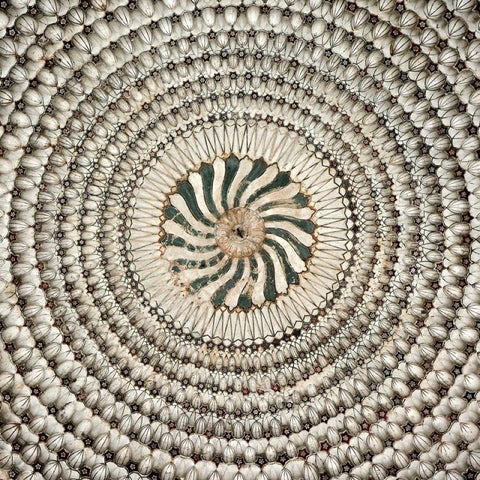
The Bibi Ka Maqbara (English: "Tomb of the Lady") is a tomb situated in Aurangabad, Maharashtra, India. It was dispatched in 1660 by the Mughal sovereign Aurangzeb in the memory of his first and boss spouse Dilras Banu Begum (after death known as Rabia-ud-Daurani) and is viewed as an image of Aurangzeb's 'marital constancy'. It looks to some extent like the Taj Mahal, the sepulcher of Aurangzeb's mom, Mumtaz Mahal. Aurangzeb was very little keen on engineering however he had dispatched the little, yet exquisite, Pearl Mosque at Delhi. Bibi Ka Maqbara is the biggest structure that Aurangzeb has surprisingly.
The correlation with the Taj Mahal has regularly clouded its own one of a kind significant appeal. Because of the solid likeness, it is additionally called the Dakkhani (Taj of the Deccan). Bibi Ka Maqbara is the "head landmark" of Aurangabad and its notable city. An engraving found on the fundamental passageway entryway makes reference to that this tomb was planned and raised by Ata-ullah, a designer and Hanspat Rai, a specialist individually. Ata-ullah was the child of Ustad Ahmad Lahauri, the central creator of the Taj Mahal. Aurangzeb's child, Azam Shah, was in later years placed accountable for managing the fix work of the sepulcher by Aurangzeb.
History
The tomb during the 1880s
Dilras Banu Begum was brought into the world a princess of the conspicuous Safavid administration of Iran (Persia) and was the little girl of Mirza Badi-uz-Zaman Safavi (titled Shahnawaz Khan), who was the emissary of Gujarat. She wedded Prince Muhi-ud-clamor (later known as Aurangzeb upon his promotion) on 8 May 1637 in Agra. Dilras was his first spouse and boss partner, just as his top pick. She bore her significant other five kids — Zeb-un-Nissa, Zinat-un-Nissa, Zubdat-un-Nissa, Muhammad Azam Shah and Sultan Muhammad Akbar.
Subsequent to bringing forth her fifth kid, Muhammad Akbar, Dilras Banu Begum conceivably experienced puerperal fever, because of complexities brought about by the conveyance and kicked the bucket a month after the introduction of her child on 8 October 1657. Upon her passing, Aurangzeb's torment was outrageous and their oldest child, Azam Shah, was lamented to the point that he had a mental meltdown. It turned into Dilras' oldest little girl, Princess Zeb-un-Nissa's obligation to assume responsibility for her infant sibling. Zeb-un-Nissa spoiled her sibling a ton, and simultaneously, Aurangzeb significantly reveled his motherless child and the ruler before long turned into his best-adored child.
In 1660, Aurangzeb authorized a catacomb at Aurangabad to go about as Dilras' last resting spot, known as Bibi Ka Maqbara ("Tomb of the Lady"). Here, Dilras was covered under the after death title of 'Rabia-ud-Daurani' ("Rabia of the Age"). In the next years, her tomb was fixed by her child Azam Shah compelled. Bibi Ka Maqbara was the biggest structure that Aurangzeb had shockingly and looks to some extent like the Taj Mahal, the tomb of Dilras' relative, Empress Mumtaz Mahal, who herself kicked the bucket in labor. Aurangzeb, himself, is covered a couple of kilometers from her catacomb in Khuldabad.
Development
Bibi Ka Maqbara is accepted to have been worked somewhere in the range of 1668 and 1669 C.E. As per the "Tarikh Namah" of Ghulam Mustafa, the expense of development of the tomb was Rs. 668,203-7 (rupees six lakh, sixty-8,000, 200 three and seven annas) – Aurangzeb allotted just Rs. 700,000 for its development. An engraving found on the primary passageway entryway makes reference to that this catacomb was structured and raised by Ata-ullah, a draftsman and Hanspat Rai, an architect individually. The marble for this tomb was brought from mines close Jaipur. As per Tavernier, around 300 trucks loaded down with marble, drawn by at any rate 12 bulls, were seen by him during his adventure from Surat to Golconda. The sepulcher was expected to equal the Taj Mahal, yet the decrease in engineering and extents of the structure (both because of the extreme budgetary limitations forced by Aurangzeb) had brought about a poor duplicate of the last mentioned.
The catacomb is spread out in a charbagh formal nursery. It remains at the focal point of a gigantic fenced in area estimating around 458 m. N-S X 275 m. E-W. Baradaris or pillared structures are situated at the focal point of north, east and western piece of the fenced in area divider. The high fenced in area divider is crenelated with pointed angled breaks and bastions at ordinary interims. The breaks are isolated by pilasters, delegated with little minarets. The tomb is based on a high square stage with four minarets at its corners, which is drawn closer by a trip of steps from the three sides. A mosque is found toward the west of the fundamental structure, a later expansion by the Nizam of Hyderabad, bringing about conclusion of the west entrance.
Section to the catacomb is through a primary passage entryway on its south, which has foliage plans on metal plate on wood covering from the outside. In the wake of going through the passage a little tank is given and a position of safety screen divider prompts the principle structure. The screened pathway has a progression of wellsprings at its inside.
The tomb is encased with marble up to the dado level. Over the dado level, it is developed of basaltic snare up to the base of the arch; the last is again worked of marble. A fine mortar covers the basaltic snare and given a fine cleaned completion and enhanced with fine stucco enrichments. The human survives from Rabia Daurani are set underneath the ground level encompassed by an octagonal jali punctured marble screen with impeccable structures, which can be drawn closer by a plummeting trip of steps. The top of this load compares to the ground level of the catacomb is penetrated by an octagonal opening and given a low blockaded marble screen. This makes the tomb visible from the beginning through this octagonal opening. The sepulcher is delegated by a vault penetrated with trellis works and going with boards enlivened with bloom plans. The structure is as a hexagon, its points ornamented with minarets.


