NEPAL
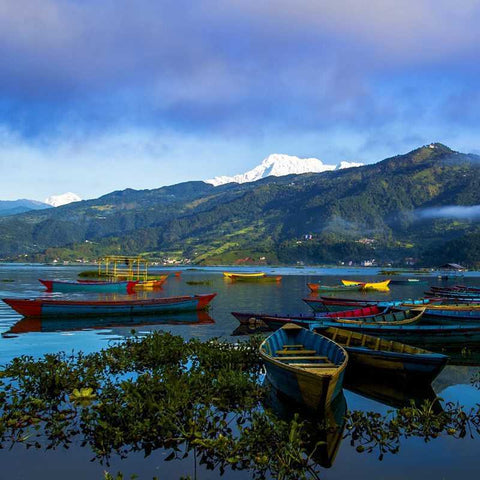
Nepal is a landlocked nation in Southern Asia, between the Tibet self-governing district of China and India. It contains 8 of the world's 10 most noteworthy pinnacles, including Mount Everest - the world's tallest - on the outskirt with Tibet, and Lumbini, the origin of Gautama Buddha, the author of Buddhism.
A government for many years, Nepal was pronounced a republic in June 2008.
Get it
Geology
Guests to Nepal for the most part partner the country with snow-topped mountain crests. While there are more than 90 tops which lie above 7000m (22,966 ft), around 33% of the nation is low-lying and subtropical. The country's height ascends from under 100 meters (328 ft) rise in the tropical Terai (the northern edge of the Gangetic Plain) to Sagarmāthā (Mount Everest) - the world's most noteworthy mountain at 8,848m (29,029 ft).
Height Zones
Nepal has been partitioned into height zones, south to north:
External Terai - Level fields, a social and etymological augmentation of northern India. Nepali is spoken not exactly Awadhi and Bhojpuri tongues identified with Hindi and Maithili. Lumbini, Buddha's origination, Kapilvastu - Tilaurakot, the capital of the Shakya Kingdom and Janakpur, Sita's origin, are in this zone. Different urban communities - Dhangadhi, Nepalgunj, Bhairawa, Butwal, Birgunj, Janakpur and Biratnagar - are transportation center points and bordertowns more than movement goals. By and by the Terai may offer open doors for personal presentation to customary Indian culture that have turned out to be less accessible in India itself.
Siwalik Range or Churia Hills - the peripheral and most reduced scope of lower regions, about 600m (2,000 ft) high. Reaches out the nation over east to west however with huge holes and numerous subranges. Poor soils and no farming to discuss. No created visitor goals, anyway the backwoods are wild and the meager populace of crude seekers and gatherers is extraordinary.
Inward Terai - enormous valleys between the Siwaliks and higher lower regions toward the north. The Dang and Deukhuri valleys in the Mid West are the biggest, offering chances to encounter Tharu workmanship and culture. Chitwan south of Kathmandu is another of these valleys, known for Chitwan National Park where tigers, rhinos, crocodiles, deer and flying creatures can be watched. Initially these valleys were malarial and gently populated by Tharus who had advanced obstruction and created structural and conduct adjustments constraining introduction to the most perilous nighttime mosquitoes. Concealment of mosquitoes with DDT during the 1960s opened these valleys to pilgrims from the slopes who cleared timberlands and uprooted and abused Tharus. In any case remoter pieces of these valleys still have a Garden of Eden quality - woodlands broken by uncertain fields, sluggish waterways, intriguing native people groups.
Mahabharat Range - a noticeable lower region go persistent the nation over from east to west aside from thin transecting gulches, with rises climbing up to 3,000m (10,000 ft). Soak southern slants are a dead zone among marsh and Pahari (slope) societies and dialects, which start along the peak and gentler northern inclines. Given clear skies, there are all encompassing perspectives on high himalaya from anyplace on the peak. Immature as a vacationer setting contrasted with India's 'Slope Stations', all things considered Daman and Tansen are alluring goals.
Center Hills - Valleys north of the Mahabharat Range and slopes up to about 2,000m (6,500 ft). are for the most part possessed by Hindus of the Bahun (consecrated brahmin) and Chhetri (warriors and rulers) standings who communicate in Nepali as their first language. Higher where it turns out to be too cold to even think about growing rice, populaces are generally Magar, Gurung, Tamang, Rai or Limbu, the slope clans from which the British selected Gurkha fighters while the officers' families developed harvests fit to calm atmospheres. Men in these ethnic gatherings likewise fill in as doormen or might be herders moving their groups into the high mountains in summer and the lower valleys in winter. Trekking through the slopes is unremittingly beautiful with streams and terraced fields, pleasant towns, an assortment of ethnic gatherings with unmistakable outfits, and perspectives on the high Himalayas from high focuses.
Valleys - Kathmandu and toward the west Pokhara involve enormous valleys in the slopes. The Kathmandu Valley was urbanized some time before the principal Europeans achieved the scene and has noteworthy neighborhoods, sanctuary buildings, pagodas, Buddhist stupas, royal residences and bazaars. Its locals are transcendently Newar ranchers, brokers, specialists and government workers. Newar culture is an intriguing blend of Hindu and Buddhist components. Lamentably a scope of slopes north of this valley point of confinement perspectives on the Himalayas. Pokhara has less urban focal points however extraordinary perspectives on the close-by Annapurna Himalaya. Pokhara's Newar populace is kept to bazaars. Somewhere else upper station Hindus rule, whose progenitors most likely were Khas people groups from far western Nepal. Both valleys offer fantastic chances to encounter Nepal without strenuous trekking. Smaller valleys along streams and waterways are significant rice-developing focuses in the slopes. There is a constrained measure of this land and its greater part is claimed by upper standing Hindus.
Lekhs - Snow every so often falls and keeps going days or weeks in the winter above 3,000m (10,000 ft), however softens away in summer beneath about 5,500m (18,000 ft). Treeline is about 4,000m (13,000 ft). This zone is utilized for summer pasturage however not all year home.
North of the lekhs, the cold high Himalayas rise suddenly along a shortcoming zone to tops over 6,700m (22,000 ft) and even over 8,000m (26,000 ft). Himalaya signifies 'dwelling place snow', which is uninhabited. Valleys among the pinnacles are possessed, particularly along exchange courses where rice from the marshes was exchanged for salt from the Tibetan Plateau alongside different merchandise. Exchange has reduced since China attached Tibet during the 1950s yet taking into account trekkers and climbers has turned into a monetary motor. Individuals living along these courses have Tibetan affinities however normally talk familiar Nepali.
Trans-Himalaya - Peaks in this locale north of the most noteworthy Himalayas in focal and western Nepal are lower and gentler, for the most part around 6,000m (20,000 ft). Valleys underneath 5,000m (17,000 ft). are possessed by individuals who are basically Tibetan and have adjusted to living at a lot higher rises than different Nepalis. Streets have not yet infiltrated this far and travel is costly via air or exhausting by walking. All things considered, it is a one of a kind chance to encounter an exceptionally critical and appealing society in awesome environment.
Stream bowls
Stream bowls are additionally significant geographic divisions. The Mahabharat Range is a noteworthy hydrologic hindrance in Nepal and different pieces of the Himalaya. South-streaming waterways join in candelabra shapes to get through this range in a couple of restricted canyons. Travel is generally simpler inside these candelabra waste frameworks than between them, so high partitions between waterway frameworks turned out to be truly significant political, semantic and social limits.
Karnali-Seti-Bheri
The Karnali framework in the far west is the origin of Pahari ('slope') culture. It was settled by individuals called Khas talking an indo-european language called Khaskura ('Khas talk') that was identified with other north indian dialects, all asserting drop from traditional Sanskrit.
East of the Karnali legitimate, along a noteworthy tributary called the Bheri and further east in another bowl called the Rapti carried on a Tibeto-Burman individuals called Kham. Khas and Kham individuals appear to have been partners and presumably intermarried to make the union of aryan and mongoloid highlights that particularly describes the second-most elevated Chhetri (Kshatriya) station. It creates the impression that Khas rulers enrolled Kham men as watchmen and warriors. Khas and Kham regions in the far west were subdivided into little kingdoms called the Baisi, actually '22' as they were checked.
Nepal has one of the world's most elevated birthrates since Hindu young ladies as a rule wed by their initial youngsters, making their whole regenerative potential be used. Besides, men who can manage the cost of it frequently take various spouses. This may follow back to Khas culture, clarifying persevering Khas colonization eastbound as limited measures of land appropriate for rice development were definitely overwhelmed by high birthrates.
Rapti and Gandaki
The Rapti stream framework east of the Karnali-Bheri had couple of swamps reasonable for developing rice and broad good countries that were not alluring for Khas settlement but rather were a boundary to movement. Anyway the Rapti's upper tributaries climbed to some degree south of the Himalayas. Between these tributaries and the Dhaulagiri scope of the Himalayas, an enormous east-west valley canceled Dhorpatan stretching the upper Bheri gave a reroute eastbound, over a simple pass called Jaljala into the Gandaki stream framework further east. The Gandaki is said to have seven noteworthy tributaries, most ascending in or past the high Himalaya. They converge to slice through the Mahabharat and Siwalik ranges. In this bowl heights were for the most part lower and precipitation was higher contrasted with the Karnali-Bheri and Rapti bowls. There was extraordinary potential for rice development, the rural base of the Khas lifestyle. A gathering of little realms called the Chaubisi created. Chaubisi actually signifies '24', as these kingdoms were checked. Not all were Khas kindoms. Some were Magar - an enormous indigenous slope clan individuals identified with the Kham. Different kingdoms were Gurung and Tamang. A few Gandaki tributaries ascended in the trans-Himalayan locale where occupants and rulers turned out to be progressively Tibetanized toward the north.
A government for many years, Nepal was pronounced a republic in June 2008.
Get it
Geology
Guests to Nepal for the most part partner the country with snow-topped mountain crests. While there are more than 90 tops which lie above 7000m (22,966 ft), around 33% of the nation is low-lying and subtropical. The country's height ascends from under 100 meters (328 ft) rise in the tropical Terai (the northern edge of the Gangetic Plain) to Sagarmāthā (Mount Everest) - the world's most noteworthy mountain at 8,848m (29,029 ft).
Height Zones
Nepal has been partitioned into height zones, south to north:
External Terai - Level fields, a social and etymological augmentation of northern India. Nepali is spoken not exactly Awadhi and Bhojpuri tongues identified with Hindi and Maithili. Lumbini, Buddha's origination, Kapilvastu - Tilaurakot, the capital of the Shakya Kingdom and Janakpur, Sita's origin, are in this zone. Different urban communities - Dhangadhi, Nepalgunj, Bhairawa, Butwal, Birgunj, Janakpur and Biratnagar - are transportation center points and bordertowns more than movement goals. By and by the Terai may offer open doors for personal presentation to customary Indian culture that have turned out to be less accessible in India itself.
Siwalik Range or Churia Hills - the peripheral and most reduced scope of lower regions, about 600m (2,000 ft) high. Reaches out the nation over east to west however with huge holes and numerous subranges. Poor soils and no farming to discuss. No created visitor goals, anyway the backwoods are wild and the meager populace of crude seekers and gatherers is extraordinary.
Inward Terai - enormous valleys between the Siwaliks and higher lower regions toward the north. The Dang and Deukhuri valleys in the Mid West are the biggest, offering chances to encounter Tharu workmanship and culture. Chitwan south of Kathmandu is another of these valleys, known for Chitwan National Park where tigers, rhinos, crocodiles, deer and flying creatures can be watched. Initially these valleys were malarial and gently populated by Tharus who had advanced obstruction and created structural and conduct adjustments constraining introduction to the most perilous nighttime mosquitoes. Concealment of mosquitoes with DDT during the 1960s opened these valleys to pilgrims from the slopes who cleared timberlands and uprooted and abused Tharus. In any case remoter pieces of these valleys still have a Garden of Eden quality - woodlands broken by uncertain fields, sluggish waterways, intriguing native people groups.
Mahabharat Range - a noticeable lower region go persistent the nation over from east to west aside from thin transecting gulches, with rises climbing up to 3,000m (10,000 ft). Soak southern slants are a dead zone among marsh and Pahari (slope) societies and dialects, which start along the peak and gentler northern inclines. Given clear skies, there are all encompassing perspectives on high himalaya from anyplace on the peak. Immature as a vacationer setting contrasted with India's 'Slope Stations', all things considered Daman and Tansen are alluring goals.
Center Hills - Valleys north of the Mahabharat Range and slopes up to about 2,000m (6,500 ft). are for the most part possessed by Hindus of the Bahun (consecrated brahmin) and Chhetri (warriors and rulers) standings who communicate in Nepali as their first language. Higher where it turns out to be too cold to even think about growing rice, populaces are generally Magar, Gurung, Tamang, Rai or Limbu, the slope clans from which the British selected Gurkha fighters while the officers' families developed harvests fit to calm atmospheres. Men in these ethnic gatherings likewise fill in as doormen or might be herders moving their groups into the high mountains in summer and the lower valleys in winter. Trekking through the slopes is unremittingly beautiful with streams and terraced fields, pleasant towns, an assortment of ethnic gatherings with unmistakable outfits, and perspectives on the high Himalayas from high focuses.
Valleys - Kathmandu and toward the west Pokhara involve enormous valleys in the slopes. The Kathmandu Valley was urbanized some time before the principal Europeans achieved the scene and has noteworthy neighborhoods, sanctuary buildings, pagodas, Buddhist stupas, royal residences and bazaars. Its locals are transcendently Newar ranchers, brokers, specialists and government workers. Newar culture is an intriguing blend of Hindu and Buddhist components. Lamentably a scope of slopes north of this valley point of confinement perspectives on the Himalayas. Pokhara has less urban focal points however extraordinary perspectives on the close-by Annapurna Himalaya. Pokhara's Newar populace is kept to bazaars. Somewhere else upper station Hindus rule, whose progenitors most likely were Khas people groups from far western Nepal. Both valleys offer fantastic chances to encounter Nepal without strenuous trekking. Smaller valleys along streams and waterways are significant rice-developing focuses in the slopes. There is a constrained measure of this land and its greater part is claimed by upper standing Hindus.
Lekhs - Snow every so often falls and keeps going days or weeks in the winter above 3,000m (10,000 ft), however softens away in summer beneath about 5,500m (18,000 ft). Treeline is about 4,000m (13,000 ft). This zone is utilized for summer pasturage however not all year home.
North of the lekhs, the cold high Himalayas rise suddenly along a shortcoming zone to tops over 6,700m (22,000 ft) and even over 8,000m (26,000 ft). Himalaya signifies 'dwelling place snow', which is uninhabited. Valleys among the pinnacles are possessed, particularly along exchange courses where rice from the marshes was exchanged for salt from the Tibetan Plateau alongside different merchandise. Exchange has reduced since China attached Tibet during the 1950s yet taking into account trekkers and climbers has turned into a monetary motor. Individuals living along these courses have Tibetan affinities however normally talk familiar Nepali.
Trans-Himalaya - Peaks in this locale north of the most noteworthy Himalayas in focal and western Nepal are lower and gentler, for the most part around 6,000m (20,000 ft). Valleys underneath 5,000m (17,000 ft). are possessed by individuals who are basically Tibetan and have adjusted to living at a lot higher rises than different Nepalis. Streets have not yet infiltrated this far and travel is costly via air or exhausting by walking. All things considered, it is a one of a kind chance to encounter an exceptionally critical and appealing society in awesome environment.
Stream bowls
Stream bowls are additionally significant geographic divisions. The Mahabharat Range is a noteworthy hydrologic hindrance in Nepal and different pieces of the Himalaya. South-streaming waterways join in candelabra shapes to get through this range in a couple of restricted canyons. Travel is generally simpler inside these candelabra waste frameworks than between them, so high partitions between waterway frameworks turned out to be truly significant political, semantic and social limits.
Karnali-Seti-Bheri
The Karnali framework in the far west is the origin of Pahari ('slope') culture. It was settled by individuals called Khas talking an indo-european language called Khaskura ('Khas talk') that was identified with other north indian dialects, all asserting drop from traditional Sanskrit.
East of the Karnali legitimate, along a noteworthy tributary called the Bheri and further east in another bowl called the Rapti carried on a Tibeto-Burman individuals called Kham. Khas and Kham individuals appear to have been partners and presumably intermarried to make the union of aryan and mongoloid highlights that particularly describes the second-most elevated Chhetri (Kshatriya) station. It creates the impression that Khas rulers enrolled Kham men as watchmen and warriors. Khas and Kham regions in the far west were subdivided into little kingdoms called the Baisi, actually '22' as they were checked.
Nepal has one of the world's most elevated birthrates since Hindu young ladies as a rule wed by their initial youngsters, making their whole regenerative potential be used. Besides, men who can manage the cost of it frequently take various spouses. This may follow back to Khas culture, clarifying persevering Khas colonization eastbound as limited measures of land appropriate for rice development were definitely overwhelmed by high birthrates.
Rapti and Gandaki
The Rapti stream framework east of the Karnali-Bheri had couple of swamps reasonable for developing rice and broad good countries that were not alluring for Khas settlement but rather were a boundary to movement. Anyway the Rapti's upper tributaries climbed to some degree south of the Himalayas. Between these tributaries and the Dhaulagiri scope of the Himalayas, an enormous east-west valley canceled Dhorpatan stretching the upper Bheri gave a reroute eastbound, over a simple pass called Jaljala into the Gandaki stream framework further east. The Gandaki is said to have seven noteworthy tributaries, most ascending in or past the high Himalaya. They converge to slice through the Mahabharat and Siwalik ranges. In this bowl heights were for the most part lower and precipitation was higher contrasted with the Karnali-Bheri and Rapti bowls. There was extraordinary potential for rice development, the rural base of the Khas lifestyle. A gathering of little realms called the Chaubisi created. Chaubisi actually signifies '24', as these kingdoms were checked. Not all were Khas kindoms. Some were Magar - an enormous indigenous slope clan individuals identified with the Kham. Different kingdoms were Gurung and Tamang. A few Gandaki tributaries ascended in the trans-Himalayan locale where occupants and rulers turned out to be progressively Tibetanized toward the north.
Development of Shah Dynasty from Gorkha
Inside the Chaubisi kingdoms of the Gandaki bowl, Gorkha was a little valley east of Pokhara led by a Khas family currently called Shah, an honorific title that may have come later, anyway any prior name is by all accounts overlooked. In 1743AD Prithvi Narayan Shah turned into the leader of Gorkha after his dad Nara Bhupal Shah passed on. Prithvi Narayan as of now had a notoriety for being a rash upstart. Making plans to modernize Gorkha's military, he was bringing present day arms from India when traditions officers requested investigation and installment of obligations. Prithvi Narayan won't and assaulted the officers, executing a few preceding getting away with his arms and men. He additionally visited Benares to contemplate the circumstance of neighborhood rulers and the developing infringement of British interests. Prithvi inferred that attack was an unending peril to rulers on the fields of northern India, though the slopes were progressively solid and offered more extension to cut out an enduring domain.
Kathmandu Valley (Bagmati)
Thin winding street leads through incredibly various landscape in Nepal. This street drives north from Kathmandu towards Tibet.
Prithvi Narayan more likely than not been an alluring figure, for he selected, prepared and prepared a considerable armed force and influenced his subjects to guarantee this from his rising until his demise in 1775. Through triumph and settlement, he solidified a few Chaubisi kingdoms. As his space extended, Khaskura wound up known as Gorkhali, for example the language of the Gorkha kingdom. At that point he moved east into the following waterway bowl, the Bagmati which depletes the Kathmandu Valley that held three little however prosperous urban kingdoms. Like the Rapti, the Bagmati rises to some degree south of the Himalaya. In contrast to the Rapti bowl, this valley had once held an enormous lake and the staying alluvial soil was outstandingly ripe. Between the farming bounty, nearby artworks, and broad exchange with Tibet, the urban areas were prosperous. Prithvi Narayan enclosed the valley, cutting off exchange and limiting normal exercises, notwithstanding cultivating and getting water. With a mix of stealth, ruthlessness and terrorizing he won and removed the nearby rulers in 1769, making Kathmandu his new capital. This was the high purpose of Prithvi Narayan's vocation, anyway he kept uniting the Kathmandu Valley with the Chaubisi and Baisi organizations toward the west until his passing in 1775. Gorkhali was re-named Nepali as 'Nepal' came to mean the urbanized Kathmandu Valley, however all terrains managed by the Shahs.
Koshi
Prithvi Narayan's beneficiaries Pratap Singh, Rana Bahadur and Girvan Yuddha proceeded with development of their kingdom into the Koshi waterway bowl east of the Bagmati framework. Like the Gandaki, the Koshi customarily has seven noteworthy tributaries sliding from the Himalayas before uniting to get through the Mahabharat and Siwalik ranges. Reaches depleted by Koshi tributaries incorporate Mount Everest and its neighboring tops, just as the western side of the Kangchenjunga massif. Kangchenjunga and a high edge toward the south are the watershed between the Koshi and Tista bowls just as the fringe among Nepal and the previous kingdom of Sikkim that India attached in 1975.
Regulation by British
The Shah line's development proceeded with eastbound crosswise over Sikkim and westbound crosswise over Kumaon and past Dehra Dun to the Sutlej River, until the British pronounced war in 1814 lastly vanquished Nepalese powers in 1816. The British needed a cushion state between British India and the Chinese domain that eventually controlled Tibet, so it cut Nepal back roughly to its present size and let it stay autonomous.
Casual Settlement in Sikkim and Bhutan
By the by Nepalese eastbound colonization past the Kosi proceeded casually, still determined by high birthrates. By the 1800s eager for land Nepalis were settling in the Tista bowl, which happened to be an alternate nation, Sikkim. During the 1900s they were settling past Sikkim in the kingdom of Bhutan. This kingdom - where late marriage and low populace densities won among the indigenous, socially Tibetan populace - saw the statistic composing on the divider and removed upwards of 100,000 Nepalis in 1990.
Hindu Groups
Hindu stations relocated from Southern piece of present day Nepal to Nepal after eleventh century. The conventional Hindu standing framework depends on the four Varna Vyawastha "the class framework" of Brahman (Bahun) clerics, researchers and guides; Kshatriya (Chhetri) rulers and warriors, Vaishya (traders); Shudra (ranchers and modest occupations). Anyway the center Vaishya and Shudra are underrepresented in the slopes, evidently in light of the fact that they didn't have convincing motivation to leave the fields while Muslim trespassers endeavored to dispose of past elites. Dalits appear to have went with the upper ranks into the slopes since they were bound by long standing support courses of action.
Conventional position guidelines oversee who can eat with whom, particularly when bubbled rice is served, and who can acknowledge water from whom. Until the 1950s these standards were authorized by law.
Dalits are liable to station based separation thus called 'distance' in social, financial, instructive, political and religious zones. The National Dalit Commission (2002) sorted 28 social gatherings as Dalits. Some contend that the utilization of the term Dalit will never under any circumstance help to cancel station based distance. (Truly, 'Dalit' means 'smothered' in Nepali.) There are recommendations that the term ought not be utilized on the grounds that it breeds mediocrity as well as annoying.
Newar
Newars, — the indigenous individuals of the Kathmandu valley—pursue both Hinduism and Buddhism. As per the 2001 statistics, they can be arranged into 40 particular social gatherings, however all talk a typical language called Nepal bhasa (Newa bhaaya). Newars utilize winning lingua francas to convey outside their locale: Nepali in the slopes and Maithili, Bhojpuri and Awadhi in the Terai.
Indigenous people groups
The ethnic gatherings of the slopes, Terai and mountain regions are assembled as Janajati. As per the National Foundation for Development of Indigenous Nationalities (NFDIN), ethnic gatherings are those "who have their very own first language and conventional traditions, an unmistakable social character, a particular social structure and composed or oral history the majority of their own". An aggregate of 61 Adibasi Janajatis have been perceived by the Nepal Government, 5 are from the mountain areas, 20 from the Hills, 7 from internal Terai and 11 from the Terai locale. A Janajati is a network who has its own native language and customary culture but does not fall under the ordinary fourfold Varna of the Hindu framework or the Hindu various leveled rank structure. A large number of these ethnic gatherings are Hinduized somewhat, albeit Hindu practices supplement as opposed to supplant increasingly old convictions and practices. In contrast to the Hindus, numerous indigenous nationalities of Nepal, for example, the Sherpa individuals just as the general population of Muslim and Christian beliefs, have a culture of eating hamburger.
Other station and ethnic gatherings incorporated into the 'other' class are; Sikhs, Christians, Bengalis, and Marawadis.
Diverse indigenous nationalities are in various phases of improvement. Some indigenous nationalities are travelers, for example Raute, and some are woods occupants, for example Chepang and Bankaria. The vast majority of the indigenous nationalities depend on farming and pastoralism and not many are cosmopolitan, for example Newar.
Religion
The Census of 2011 has recorded 10 religions—Hindu, Buddhist, Islam, Kiranti, Christian, Prakriti, Bon, Jain, Bahai and Sikh. As indicated by statistics 2011 principle religions are Hinduism (81.3%/21,551,492), Buddhism (9.0%/2,396,099), Islam (4.4%/1,162,370), Kirat (3.1%/807,169), Christianity (1.4%/375,699), Prakriti (0.5%/121,982), Bon (13,006), Jainism (3,214), Bahai (1,283) and Sikhism (609).
Inside the Chaubisi kingdoms of the Gandaki bowl, Gorkha was a little valley east of Pokhara led by a Khas family currently called Shah, an honorific title that may have come later, anyway any prior name is by all accounts overlooked. In 1743AD Prithvi Narayan Shah turned into the leader of Gorkha after his dad Nara Bhupal Shah passed on. Prithvi Narayan as of now had a notoriety for being a rash upstart. Making plans to modernize Gorkha's military, he was bringing present day arms from India when traditions officers requested investigation and installment of obligations. Prithvi Narayan won't and assaulted the officers, executing a few preceding getting away with his arms and men. He additionally visited Benares to contemplate the circumstance of neighborhood rulers and the developing infringement of British interests. Prithvi inferred that attack was an unending peril to rulers on the fields of northern India, though the slopes were progressively solid and offered more extension to cut out an enduring domain.
Kathmandu Valley (Bagmati)
Thin winding street leads through incredibly various landscape in Nepal. This street drives north from Kathmandu towards Tibet.
Prithvi Narayan more likely than not been an alluring figure, for he selected, prepared and prepared a considerable armed force and influenced his subjects to guarantee this from his rising until his demise in 1775. Through triumph and settlement, he solidified a few Chaubisi kingdoms. As his space extended, Khaskura wound up known as Gorkhali, for example the language of the Gorkha kingdom. At that point he moved east into the following waterway bowl, the Bagmati which depletes the Kathmandu Valley that held three little however prosperous urban kingdoms. Like the Rapti, the Bagmati rises to some degree south of the Himalaya. In contrast to the Rapti bowl, this valley had once held an enormous lake and the staying alluvial soil was outstandingly ripe. Between the farming bounty, nearby artworks, and broad exchange with Tibet, the urban areas were prosperous. Prithvi Narayan enclosed the valley, cutting off exchange and limiting normal exercises, notwithstanding cultivating and getting water. With a mix of stealth, ruthlessness and terrorizing he won and removed the nearby rulers in 1769, making Kathmandu his new capital. This was the high purpose of Prithvi Narayan's vocation, anyway he kept uniting the Kathmandu Valley with the Chaubisi and Baisi organizations toward the west until his passing in 1775. Gorkhali was re-named Nepali as 'Nepal' came to mean the urbanized Kathmandu Valley, however all terrains managed by the Shahs.
Koshi
Prithvi Narayan's beneficiaries Pratap Singh, Rana Bahadur and Girvan Yuddha proceeded with development of their kingdom into the Koshi waterway bowl east of the Bagmati framework. Like the Gandaki, the Koshi customarily has seven noteworthy tributaries sliding from the Himalayas before uniting to get through the Mahabharat and Siwalik ranges. Reaches depleted by Koshi tributaries incorporate Mount Everest and its neighboring tops, just as the western side of the Kangchenjunga massif. Kangchenjunga and a high edge toward the south are the watershed between the Koshi and Tista bowls just as the fringe among Nepal and the previous kingdom of Sikkim that India attached in 1975.
Regulation by British
The Shah line's development proceeded with eastbound crosswise over Sikkim and westbound crosswise over Kumaon and past Dehra Dun to the Sutlej River, until the British pronounced war in 1814 lastly vanquished Nepalese powers in 1816. The British needed a cushion state between British India and the Chinese domain that eventually controlled Tibet, so it cut Nepal back roughly to its present size and let it stay autonomous.
Casual Settlement in Sikkim and Bhutan
By the by Nepalese eastbound colonization past the Kosi proceeded casually, still determined by high birthrates. By the 1800s eager for land Nepalis were settling in the Tista bowl, which happened to be an alternate nation, Sikkim. During the 1900s they were settling past Sikkim in the kingdom of Bhutan. This kingdom - where late marriage and low populace densities won among the indigenous, socially Tibetan populace - saw the statistic composing on the divider and removed upwards of 100,000 Nepalis in 1990.
Hindu Groups
Hindu stations relocated from Southern piece of present day Nepal to Nepal after eleventh century. The conventional Hindu standing framework depends on the four Varna Vyawastha "the class framework" of Brahman (Bahun) clerics, researchers and guides; Kshatriya (Chhetri) rulers and warriors, Vaishya (traders); Shudra (ranchers and modest occupations). Anyway the center Vaishya and Shudra are underrepresented in the slopes, evidently in light of the fact that they didn't have convincing motivation to leave the fields while Muslim trespassers endeavored to dispose of past elites. Dalits appear to have went with the upper ranks into the slopes since they were bound by long standing support courses of action.
Conventional position guidelines oversee who can eat with whom, particularly when bubbled rice is served, and who can acknowledge water from whom. Until the 1950s these standards were authorized by law.
Dalits are liable to station based separation thus called 'distance' in social, financial, instructive, political and religious zones. The National Dalit Commission (2002) sorted 28 social gatherings as Dalits. Some contend that the utilization of the term Dalit will never under any circumstance help to cancel station based distance. (Truly, 'Dalit' means 'smothered' in Nepali.) There are recommendations that the term ought not be utilized on the grounds that it breeds mediocrity as well as annoying.
Newar
Newars, — the indigenous individuals of the Kathmandu valley—pursue both Hinduism and Buddhism. As per the 2001 statistics, they can be arranged into 40 particular social gatherings, however all talk a typical language called Nepal bhasa (Newa bhaaya). Newars utilize winning lingua francas to convey outside their locale: Nepali in the slopes and Maithili, Bhojpuri and Awadhi in the Terai.
Indigenous people groups
The ethnic gatherings of the slopes, Terai and mountain regions are assembled as Janajati. As per the National Foundation for Development of Indigenous Nationalities (NFDIN), ethnic gatherings are those "who have their very own first language and conventional traditions, an unmistakable social character, a particular social structure and composed or oral history the majority of their own". An aggregate of 61 Adibasi Janajatis have been perceived by the Nepal Government, 5 are from the mountain areas, 20 from the Hills, 7 from internal Terai and 11 from the Terai locale. A Janajati is a network who has its own native language and customary culture but does not fall under the ordinary fourfold Varna of the Hindu framework or the Hindu various leveled rank structure. A large number of these ethnic gatherings are Hinduized somewhat, albeit Hindu practices supplement as opposed to supplant increasingly old convictions and practices. In contrast to the Hindus, numerous indigenous nationalities of Nepal, for example, the Sherpa individuals just as the general population of Muslim and Christian beliefs, have a culture of eating hamburger.
Other station and ethnic gatherings incorporated into the 'other' class are; Sikhs, Christians, Bengalis, and Marawadis.
Diverse indigenous nationalities are in various phases of improvement. Some indigenous nationalities are travelers, for example Raute, and some are woods occupants, for example Chepang and Bankaria. The vast majority of the indigenous nationalities depend on farming and pastoralism and not many are cosmopolitan, for example Newar.
Religion
The Census of 2011 has recorded 10 religions—Hindu, Buddhist, Islam, Kiranti, Christian, Prakriti, Bon, Jain, Bahai and Sikh. As indicated by statistics 2011 principle religions are Hinduism (81.3%/21,551,492), Buddhism (9.0%/2,396,099), Islam (4.4%/1,162,370), Kirat (3.1%/807,169), Christianity (1.4%/375,699), Prakriti (0.5%/121,982), Bon (13,006), Jainism (3,214), Bahai (1,283) and Sikhism (609).
Atmosphere
Nepal has a Monsoonal atmosphere with four fundamental seasons - however generally a year was classified into six unmistakable atmosphere periods: Basanta (spring), Grishma (late-spring), Barkha (summer rainstorm), Sharad (early harvest time), Hemanta (late fall) and Shishir (winter).
The following is a general manual for conditions at various seasons:
Substantial monsoonal downpours from June to September - the downpours are commonly lighter high in the Himalayas than in Kathmandu, however the mountain pinnacles are frequently not unmistakable because of mists. In the Kathmandu Valley and Pokhara - rainstorm rains regularly comprise of an hour or two of downpour each a few days. The downpours clean the air, lanes, and cool the air. On the off chance that you come, bring an umbrella, expect lower hotel costs and less sightseers.
Clear and cool climate from October to December - after the storm, there is little residue noticeable all around so this is the best season to visit the sloping and uneven locales.
Cold from January to March, with the temperature in Kathmandu frequently dropping as low as 0°C (32°F) during the evening, with extraordinary cold at high rises. It is conceivable to trek in spots like the Everest area amid the winter, yet it is very cold and snow fall may anticipate going over 4,000 - 4,500 meters (13,000 - 15,000 feet). The Jomosom trek is a sensible option, remaining underneath 3,000 meters (10,000 feet) with expected least temperatures about - 10°C (14°F) (and much better odds of staying away from substantial snow.)
Dry and warm climate from April to June - there is a bounty of sprouting blooms in the Himalayas as of now, with rhododendrons, specifically, adding a sprinkle of shading to the scene. Terai temperatures may reach or surpass 40°C (104°F) while Kathmandu temperatures are about 30°C (86°F). This is the best time to attempt mountain endeavors.
The account of temperatures and precipitation of the real areas crosswise over Nepal was begun in 1962 and their midpoints gives a reference point to dissecting the atmosphere pattern.
GPS maps
There are couple of maps accessible for Nepal:
Nepal Trilogy. Which comes as 3 separate maps covering the accompanying zones: Annapurna region with Pokhara, Helambu Langtang territory of Kathmandu and Bhaktapur, Everest locale with Jiri and Tumlingtar.
Garmin NepalTOPO NPL Routable 2011.20
Urban communities
Kathmandu — capital and social focal point of Nepal, with the stupas at Boudhanath and Swayambhu
Bhaktapur — well-saved chronicled city, focal point of Nepali stoneware making, no mechanized vehicles permitted!
Biratnagar — this city is in eastern Nepal close Dharan and acclaimed for political reasons
Birgunj — business entryway among India and Nepal in mid-southern Nepal
Boudhanath — (Boudha) home of the biggest Buddhist Stupa in Nepal and a significant spot of journey and reflection for Buddhists, neighborhood Nepalis, and travelers
Janakpur — a chronicled religious focus and home to the 500-year old Janaki Temple
Namche Bazaar — a Sherpa settlement situated in the Solu Khumbu locale - well known with trekkers
Nepalgunj — the fundamental center point for the Mid-and Far-Western Development Region; Bardiya National Park is close-by
Patan — Beautiful, memorable Patan Durbar Square was assigned as a World Heritage Site by UNESCO in 1979
Different goals
Bolted between the snow pinnacles of the Himalayas and the fuming Ganges plain, Nepal has for quite some time been home to meandering religious zealots and tantric yogis. Thus, the nation has an abundance of hallowed locales and characteristic miracles:
Annapurna — well known trekking area of Nepal with the world-acclaimed Annapurna Circuit
Chitwan National Park — see tigers, rhinos and creatures in the wilderness
Daman — little town in the mountains offering all encompassing perspectives on the Himalayas; particularly shocking at dawn and dusk
Haleshi (Tibetan: Maratika) — the site of a mountain cavern where Padmasambhava accomplished a state past life and passing
Lumbini — the consecrated site of the Buddha Shakyamuni's introduction to the world
Mount Everest — the tallest pinnacle of the world in the Khumbu locale
Nagarkot — a slope station one hour from Kathmandu offering magnificent perspectives on the Himalayan Range
Parping — the site of a few holy surrenders related with Padmasambhava, the originator of Tibetan Buddhism
Tangting—a wonderful and unfamiliar conventional Gurung town with a staggering perspective on the Annapurna run
Suklaphanta National Park—biggest meadow in the Far Western Terai, however this isn't the main superlative: it is home to Nepal's, possibly Asia's, biggest populace of marsh deer
Pokhara — pleasant lake-side town quick turning into the goal of decision for explorers because of the landscape, experience sports, feasting, lodgings and unrecorded music scene
Gorkha — community close Pokhara the occupants of which were known as Gorkhali and the beginning of current Nepal
Bhimdattanagar — community close Indian fringe, Banbasa. Its closest fringe to Indian capital Delhi. Home of biggest deer group in Asia.
Jorayal — little horticultural town close Mahabharat Range, Doti. Its closest fringe to East is Bogtan Rural Municipality,Doti, on South is Chure Rural Municipality, Kailali, on West is Alital Rural Mun, Dadeldhura and on North is Ganyapdhura Rural Municipality, Dadeldhura and Shikhar Municipality, Doti.
Khandeshwori — little town on lower regions of Api Himal in Darchula.
See additionally: Sacred locales of the Indian sub-mainland.
Get in
Visas
Natives of India needn't bother with a visa to enter Nepal - they may enter utilizing an identification, photograph drivers permit or administrative/apportion/voter ID card and may remain and work uncertainly.
Visitor visas are accessible on entry for natives of every other nation (aside from Afghanistan, Cameroon, Ethiopia, Ghana, Iraq, Liberia, Nigeria, Palestine, Somalia, Swaziland, Syria and Zimbabwe) at the assigned land fringes (see underneath) for USD25, for 15 days, USD40 for 30 days and USD100 for 90 days. They must be conceded for a limit of 150 days in every year time span.
Just as US dollars, other convertible monetary standards like the euro, Pound sterling and Australian dollars can likewise be utilized however some littler section focuses (like Birgunj) may not acknowledge them.
All traveler visas are presently "different section" type visa and grant numerous passages and ways out amid the time of legitimacy.
Know that, without consent, deliberate administrations while on a vacationer visa is carefully denied. It is a culpable offense.
There is nitty gritty data on the official site of Nepal Immigration.
As of November 2016, there are various computerized machines as you enter the Kathmandu air terminal where you can either filter your international ID or enter your subtleties physically and have your photograph taken. When complete, the machines will give you a receipt which you would then be able to take to the installment stand before at last exhibiting everything to the migration officers at the corners in return for your visa.
Step by step instructions to expand your visa (as of May 2016): To broaden your vacationer visa, visit the Nepal Immigration Department in Kathmandu with your international ID and another (photograph not required for traveler visa augmentation), and pay US $2 for consistently past your visa you need to remain, up to the limit of 150 days out of every year. They require to submit electronic application structure ahead of time, yet it tends to be done in exceptional booth in the workplace. Least visa augmentation period is 15 days for visitor visas (in this way it costs 30 USD or proportionate in rupees). Be that as it may, in the event that you effectively missed your visa termination date, 20 USD of extra charge may apply. For visitor visa photograph isn't required, simply go to electronic application booth inside the Immigration Department, where decent Nepali will fill the structure for you and take a visa photograph for nothing. At that point continue to the visa application counter, pay the cash and hang tight for like one hour and they will call your name. You can ask head out organization in Thamel to do it for you, yet they will charge like 25 USD for this administration (or less in case you're a decent arbitrator).
A few bloggers referenced, that on the off chance that you outstay and simply attempt to cross outskirt in the airplane terminal, they'll charge you some additional cash, yet the closest ATM is outside the security check, so it's not entirely obvious your plane. Then again, they acknowledge dollars.
Purposes of section or exit:
The purposes of passage and exit for sightseers:
Tribhuvan International Airport, Kathmandu
Kakarvitta, Jhapa (Eastern Nepal)
Birgunj, Parsa (Central Nepal)
Kodari, Sindhupalchowk (Northern Border)
Belahia, Bhairahawa (Rupandehi, Western Nepal)
Jamunaha, Nepalgunj (Banke, Mid Western Nepal)
Mohana, Dhangadhi (Kailali, Far Western Nepal)
Gadda Chauki, Bhimdattanagar (Kanchanpur, Far Western Nepal)
Visas are free for all vacationers who originate from a SAARC nation.
Know that if originating from India, INR500 and INR1000 monetary certificates may not be imported since their course is restricted in Nepal. Notwithstanding, in section focuses that are deferring India (Karkavitta for instance) will have a lot of money trade focuses that trade Indian rupees (IC) to Nepali rupees (NC). Ask from a couple of spots for the rates. Best rates you would get will be 0-3% off from the mid-showcase rates. Anything over that, leave and attempt the following one.
Via plane
Nepal's Tribhuvan International Airport is the fundamental section point for those landing via air, and is found only outside of the Ring Road in Kathmandu. The airplane terminal fills in as the center for Nepal Airlines, which flies from different goals in India, just as Bangkok, Doha, Dubai, Hong Kong and Kuala Lumpur.
Other significant carriers that serve Nepal from crosswise over Asia incorporate Air Arabia, Air Asia X, Air China, Air India, Etihad, flydubai, Korean Air, Malaysia Airlines, Oman Air, Qatar Airways, Silk Air and Thai Airways.
Starting at 2016, the main carrier that flies straightforwardly to Kathmandu from Europe is Turkish Airlines from Istanbul.
Nepal has a Monsoonal atmosphere with four fundamental seasons - however generally a year was classified into six unmistakable atmosphere periods: Basanta (spring), Grishma (late-spring), Barkha (summer rainstorm), Sharad (early harvest time), Hemanta (late fall) and Shishir (winter).
The following is a general manual for conditions at various seasons:
Substantial monsoonal downpours from June to September - the downpours are commonly lighter high in the Himalayas than in Kathmandu, however the mountain pinnacles are frequently not unmistakable because of mists. In the Kathmandu Valley and Pokhara - rainstorm rains regularly comprise of an hour or two of downpour each a few days. The downpours clean the air, lanes, and cool the air. On the off chance that you come, bring an umbrella, expect lower hotel costs and less sightseers.
Clear and cool climate from October to December - after the storm, there is little residue noticeable all around so this is the best season to visit the sloping and uneven locales.
Cold from January to March, with the temperature in Kathmandu frequently dropping as low as 0°C (32°F) during the evening, with extraordinary cold at high rises. It is conceivable to trek in spots like the Everest area amid the winter, yet it is very cold and snow fall may anticipate going over 4,000 - 4,500 meters (13,000 - 15,000 feet). The Jomosom trek is a sensible option, remaining underneath 3,000 meters (10,000 feet) with expected least temperatures about - 10°C (14°F) (and much better odds of staying away from substantial snow.)
Dry and warm climate from April to June - there is a bounty of sprouting blooms in the Himalayas as of now, with rhododendrons, specifically, adding a sprinkle of shading to the scene. Terai temperatures may reach or surpass 40°C (104°F) while Kathmandu temperatures are about 30°C (86°F). This is the best time to attempt mountain endeavors.
The account of temperatures and precipitation of the real areas crosswise over Nepal was begun in 1962 and their midpoints gives a reference point to dissecting the atmosphere pattern.
GPS maps
There are couple of maps accessible for Nepal:
Nepal Trilogy. Which comes as 3 separate maps covering the accompanying zones: Annapurna region with Pokhara, Helambu Langtang territory of Kathmandu and Bhaktapur, Everest locale with Jiri and Tumlingtar.
Garmin NepalTOPO NPL Routable 2011.20
Urban communities
Kathmandu — capital and social focal point of Nepal, with the stupas at Boudhanath and Swayambhu
Bhaktapur — well-saved chronicled city, focal point of Nepali stoneware making, no mechanized vehicles permitted!
Biratnagar — this city is in eastern Nepal close Dharan and acclaimed for political reasons
Birgunj — business entryway among India and Nepal in mid-southern Nepal
Boudhanath — (Boudha) home of the biggest Buddhist Stupa in Nepal and a significant spot of journey and reflection for Buddhists, neighborhood Nepalis, and travelers
Janakpur — a chronicled religious focus and home to the 500-year old Janaki Temple
Namche Bazaar — a Sherpa settlement situated in the Solu Khumbu locale - well known with trekkers
Nepalgunj — the fundamental center point for the Mid-and Far-Western Development Region; Bardiya National Park is close-by
Patan — Beautiful, memorable Patan Durbar Square was assigned as a World Heritage Site by UNESCO in 1979
Different goals
Bolted between the snow pinnacles of the Himalayas and the fuming Ganges plain, Nepal has for quite some time been home to meandering religious zealots and tantric yogis. Thus, the nation has an abundance of hallowed locales and characteristic miracles:
Annapurna — well known trekking area of Nepal with the world-acclaimed Annapurna Circuit
Chitwan National Park — see tigers, rhinos and creatures in the wilderness
Daman — little town in the mountains offering all encompassing perspectives on the Himalayas; particularly shocking at dawn and dusk
Haleshi (Tibetan: Maratika) — the site of a mountain cavern where Padmasambhava accomplished a state past life and passing
Lumbini — the consecrated site of the Buddha Shakyamuni's introduction to the world
Mount Everest — the tallest pinnacle of the world in the Khumbu locale
Nagarkot — a slope station one hour from Kathmandu offering magnificent perspectives on the Himalayan Range
Parping — the site of a few holy surrenders related with Padmasambhava, the originator of Tibetan Buddhism
Tangting—a wonderful and unfamiliar conventional Gurung town with a staggering perspective on the Annapurna run
Suklaphanta National Park—biggest meadow in the Far Western Terai, however this isn't the main superlative: it is home to Nepal's, possibly Asia's, biggest populace of marsh deer
Pokhara — pleasant lake-side town quick turning into the goal of decision for explorers because of the landscape, experience sports, feasting, lodgings and unrecorded music scene
Gorkha — community close Pokhara the occupants of which were known as Gorkhali and the beginning of current Nepal
Bhimdattanagar — community close Indian fringe, Banbasa. Its closest fringe to Indian capital Delhi. Home of biggest deer group in Asia.
Jorayal — little horticultural town close Mahabharat Range, Doti. Its closest fringe to East is Bogtan Rural Municipality,Doti, on South is Chure Rural Municipality, Kailali, on West is Alital Rural Mun, Dadeldhura and on North is Ganyapdhura Rural Municipality, Dadeldhura and Shikhar Municipality, Doti.
Khandeshwori — little town on lower regions of Api Himal in Darchula.
See additionally: Sacred locales of the Indian sub-mainland.
Get in
Visas
Natives of India needn't bother with a visa to enter Nepal - they may enter utilizing an identification, photograph drivers permit or administrative/apportion/voter ID card and may remain and work uncertainly.
Visitor visas are accessible on entry for natives of every other nation (aside from Afghanistan, Cameroon, Ethiopia, Ghana, Iraq, Liberia, Nigeria, Palestine, Somalia, Swaziland, Syria and Zimbabwe) at the assigned land fringes (see underneath) for USD25, for 15 days, USD40 for 30 days and USD100 for 90 days. They must be conceded for a limit of 150 days in every year time span.
Just as US dollars, other convertible monetary standards like the euro, Pound sterling and Australian dollars can likewise be utilized however some littler section focuses (like Birgunj) may not acknowledge them.
All traveler visas are presently "different section" type visa and grant numerous passages and ways out amid the time of legitimacy.
Know that, without consent, deliberate administrations while on a vacationer visa is carefully denied. It is a culpable offense.
There is nitty gritty data on the official site of Nepal Immigration.
As of November 2016, there are various computerized machines as you enter the Kathmandu air terminal where you can either filter your international ID or enter your subtleties physically and have your photograph taken. When complete, the machines will give you a receipt which you would then be able to take to the installment stand before at last exhibiting everything to the migration officers at the corners in return for your visa.
Step by step instructions to expand your visa (as of May 2016): To broaden your vacationer visa, visit the Nepal Immigration Department in Kathmandu with your international ID and another (photograph not required for traveler visa augmentation), and pay US $2 for consistently past your visa you need to remain, up to the limit of 150 days out of every year. They require to submit electronic application structure ahead of time, yet it tends to be done in exceptional booth in the workplace. Least visa augmentation period is 15 days for visitor visas (in this way it costs 30 USD or proportionate in rupees). Be that as it may, in the event that you effectively missed your visa termination date, 20 USD of extra charge may apply. For visitor visa photograph isn't required, simply go to electronic application booth inside the Immigration Department, where decent Nepali will fill the structure for you and take a visa photograph for nothing. At that point continue to the visa application counter, pay the cash and hang tight for like one hour and they will call your name. You can ask head out organization in Thamel to do it for you, yet they will charge like 25 USD for this administration (or less in case you're a decent arbitrator).
A few bloggers referenced, that on the off chance that you outstay and simply attempt to cross outskirt in the airplane terminal, they'll charge you some additional cash, yet the closest ATM is outside the security check, so it's not entirely obvious your plane. Then again, they acknowledge dollars.
Purposes of section or exit:
The purposes of passage and exit for sightseers:
Tribhuvan International Airport, Kathmandu
Kakarvitta, Jhapa (Eastern Nepal)
Birgunj, Parsa (Central Nepal)
Kodari, Sindhupalchowk (Northern Border)
Belahia, Bhairahawa (Rupandehi, Western Nepal)
Jamunaha, Nepalgunj (Banke, Mid Western Nepal)
Mohana, Dhangadhi (Kailali, Far Western Nepal)
Gadda Chauki, Bhimdattanagar (Kanchanpur, Far Western Nepal)
Visas are free for all vacationers who originate from a SAARC nation.
Know that if originating from India, INR500 and INR1000 monetary certificates may not be imported since their course is restricted in Nepal. Notwithstanding, in section focuses that are deferring India (Karkavitta for instance) will have a lot of money trade focuses that trade Indian rupees (IC) to Nepali rupees (NC). Ask from a couple of spots for the rates. Best rates you would get will be 0-3% off from the mid-showcase rates. Anything over that, leave and attempt the following one.
Via plane
Nepal's Tribhuvan International Airport is the fundamental section point for those landing via air, and is found only outside of the Ring Road in Kathmandu. The airplane terminal fills in as the center for Nepal Airlines, which flies from different goals in India, just as Bangkok, Doha, Dubai, Hong Kong and Kuala Lumpur.
Other significant carriers that serve Nepal from crosswise over Asia incorporate Air Arabia, Air Asia X, Air China, Air India, Etihad, flydubai, Korean Air, Malaysia Airlines, Oman Air, Qatar Airways, Silk Air and Thai Airways.
Starting at 2016, the main carrier that flies straightforwardly to Kathmandu from Europe is Turkish Airlines from Istanbul.

