Showing posts with label 2 nights and 3 days. Show all posts

Friday, 26 April 2019

Rameswaram

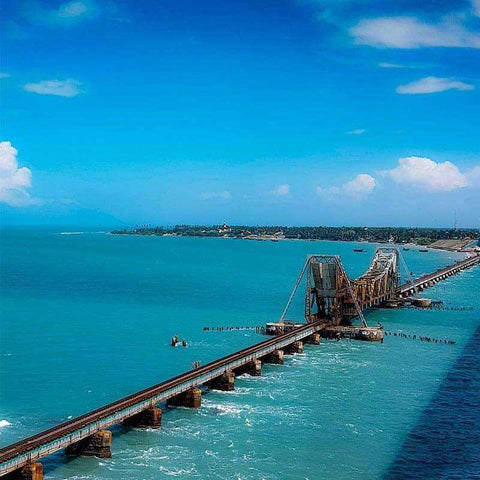
serendipity-holidays-hyderabad-telangana-madurai-pamban-bridge-800x800
Rameswaram is a town in Tamil Nadu.
Get in
By plane
Nearest Airport in Madurai - 174 km Indian Airlines connect’s Madurai with Chennai, Bangalore and Mumbai.

By train
Connected with all major cities like Chennai, Coimbatore, Madurai, Trichy, Tirunelveli

By road
Connected with all important towns of Tamil Nadu, City Buses are available including night services. Point to Point services, Tourist taxi, auto / cycle rickshaws and horse carts are also available.The taxi charges for a small car (Indica) is around Rupees 10 per KM. It costs around Rupees 3800 for return trip from Madurai to Rameswaram. Andhra Pradesh State Road Transport corporation ( APSRTC ) operates Rameswaram – Tirupathi daily service.

See
Pooja procedure at the main temple

It is very important for you to know the correct procedure to offer Pooja at the main temple. Temple management allows only Hindus to perform this pooja. It is best to hire a guide a day in advance, generally around Rs 400-500 for everything. Visiting the Ramanathaswamy Temple (main temple ) involves a 4 step process:

Mani Darshanam or spatikha Linga Darshanam - You should watch the Sphatic (Natural Crystal) mani first thing in the morning at main temple. Darshan timings are 5:00 - 6:00 a.m. Some guides around Rameswaram told you that there is no need to take a bath for seeing mani dharshan , But According to Holy Scriptures of Hindus one should have to took bath before entering Temple premises, better you have a bath.
There is a special entrance for Rs 50- but it's better to stand in the general queue for Rs 10 which, counter-intuitively, moves faster.

Samudra Snanam - Next, you should walk down to Samudram(Sea) for Snanam (bathing). The sea, 300m away from the temple, is very peaceful and shallow here without any tides at all. Mythology says that Samudram surrendered to Lord Rama during his attack on Lanka and since then it is calm.
Teerth Snanam - Proceed to the temple for Teerth snanam (Holy bath). The temple has 22 wells that are said to contain holy water from different places. You need to sequentially take bath at each place. The markings are good and you can easily make out the next well.The government rate for this is Rs 25 per person. Attendants are there at each well and they will pour water on you. They splash a bucket of water on a group of pilgrims. You may need to go in queue. You can also hire attendants out side the temple for this process. But they will charge 150 rs per person. Plenty of these attendants can be found at the temple entrances with a bucket and rope in hand. If you feel like getting drenched with one full bucket of water at each well, you need to hire an attendant; otherwise, this is not required.
Main Pooja - Now you can change your clothes and dry yourself. There are different prices for different kinds of pooja. The basic one starts at Rs 111. Your guide will arrange for the Pujari (priest), who will do some rituals. Then he will offer milk, grass, leaves, etc. to Lord Shiva on your behalf in main temple. You can view all this sitting in front at a price of Rs 500. Afterwards, he will tell you the story of Rameswaram. He will also ask you to recite some shlokas after him. Pujari charges around Rs 500-600 for his services.
You can also enjoy sumptuous prasadam at 12 noon. It is offered near inner door of Lord Shiva temple.

Sri Ramanathaswamy Temple - this temple situated near the sea on the eastern side of the island is renowned for its magnificent prakaras or corridors with massive sculptured pillars on either side. The longest corridor in the world is here and it is 197 metres long from East to West and is 133 metres wide from South-North. The temple has a Gopuram 38.4 metres tall. Different rulers built the temple as it stands today, at different periods from the 12th century A.D. Pooja is performed for an hour early morning daily to the Spadikalingam that was given by the Shankaracharya to this temple. There is a popular belief that one needs to take bath in 22 theertha kundams with in the temple premises before having darshan. Locker facility is provided to tourists just outside the temple at charge of Rs.10 per locker. Shoes and footwear are not allowed inside temple. They can be deposited outside temple for free of cost. There are many guides who will approach us as soon as we enter the temple premises. One needs to negotiate the deal of how much to pay them if we need their services. It is believed that the water from these kundams have some medicinal properties. The history of the temple is linked with "Ramayan" and it is believed the the deity was installed by Lord Rama after the war with Ravana at the instance of the great saints to get rid of the "Brahma Dosham".
Agnitheertham - Sri Ramanathaswamy temple faces east. The seashore, about 100 metres from the main entrance of the temple, is very calm and therefore ideal for bathing. The water at this place is considered sacred and known as Agni theertham. Pilgrims perform poojas in honour of their ancestors at this seashore.
Gandamadana Parvatham - is a hillock situated 3 km away and is the highest point in the island. Here one can see the imprint of Lord Rama’s feet on a chakra. The entire island of Rameswaram is visible from this point.
Sugreevar Temple/Theertham - is situated on the way to Gandamadana Parvatham near the Doordarshan Kendra.
Satchi Hanuman Temple - is considered to be the place where Hanuman delivered the good news of finding Sita to Rama with satchi or evidence, Choodamani or the jewel that belonged to Sita. Situated 3 km from the main temple, on the way to the Gandamadana Parvatham.
Badrakaliamman Temple - is a temple for Devi Durga, situated 2 km from the main temple on the way to the Gandamadana Parvatham.
The Five-faced Hanuman Temple (2 km from the main temple) - the deity of Hanuman drawn withsenthooram. Idols of Lord Ram, Sita and Hanuman brought from Dhanushkodi during the 1964 cyclone were placed here. The floating stone, used to build theSethuBandanamor the bridge between India and Lanka can be found in this temple.
JadaTheertham (about 3.5 km from Rameswaram on the Dhanushkodi road) - legend has it that Lord Rama, on his way back after killing Ravana, Worshipped SriRamalinga (believed to be installed by him). Before doing so, he washed his hair(Jada) in this theertham to purify himself.
Nambu Nayagiamman Temple - is greatly venerated by the people of Ramnad District. It is situated 8 km from the main temple in Rameswaram on the way to Dhanushkodi.
Kothandaramaswamy Temple - is located 12 km away from Rameswaram. A popular belief is that Vibishana, brother of Ravana, surrendered before Rama here.
Dhanushkodi (18 km) - the southern tip of the island, Dhanushkodi was completely washed away by the 1964 cyclone. This is a strip of land about one km wide and 18 km long on the eastern end of Rameswaram island. On one side are the waters of the Indian Ocean and on the other the waters of the Bay of Bengal. The two seas otherwise known as Ratnakaran and Mahodadhi with their confluence is shaped like a bow while the strip of land resemble an arrow poised for release. Devout Hindus consider the Adi Sethu or the arrowhead, a sacred place to perform religious rites. It is also place worth visiting for its scenic beauty and bird life.
Villoondi Theertham - is situated 7 km from the main temple on the way to Pamban.
Annai Indira Gandhi Road Bridge (12 km) - is also known as the Pamban Bridge that connects the Rameswaram island with the main land. It is the longest sea bridge in India and its length is nearly 2.2 km and stands as a fine example for Indian architecture. The bridge was constructed with sufficient elevation. The islands near by and parallel rail bridge below can be viewed from this bridge.
Do
Glass boat ride at Pamban Bridge: [Update(April 2014): THIS RIDE HAS BEEN STOPPED BY THE TOURISM DEPARTMENT, HOWEVER LOOK FOR UPDATES WHEN YOU REACH PAMBAN BRIDGE. There is only one glass boat at the govt. boating center on the other end of the bridge now. That boat too is not in order, as water has entered between the two layers of glass through which you are supposed to see the corals. The boatman will tell you that the glass is not in order only when you reach the point where you are supposed to see the corals. The water is shallow there, but you won't be able to see the corals with the glass in that condition. As such, it is an utter waste of money till the govt. officials fix the boat. Even if you go there with the hope that the boat would be repaired, before boarding that single boat check the glass and ask the boatman if it is in proper condition].
One can enjoy the wonderful glass boat ride near pambanbridge to see coral reefs in the Sea. Boat has a glass bottom which enables you to see corals through it. To reach this place, you need to catch local bus from Rameswaram bus stand to Pamban bridge. From there you have to take an auto to boat center (Rs 40 - 50)(minimum 400 per boat of 8 persons), it is almost halfway on the bridge. Boat is run by Government officials and you don't have to bargain. They provide good service and don't even expect a tip from tourists. If you want to have a good view, be there between 12 noon - 1 pm on a good sunny day. Always carry an umbrella with you and watch the coral reef in umbrella shade, otherwise you'll see your own reflection on the glass instead of corals(imp: try to go for glass boat ride with a group because some days there might be no tourists there and you might end up paying more as there is no one to share glass boat ride with you) :) '

Visit Dhanushgodi: Apart from the temple this certainly is one of the best things to see and do in Rameshwaram. One can get to Dhanushgodi either by bringing their own vehicle or by using state transport or by hiring a jeep (Rs 1,300 is the going rate) or hire an auto. One can catch #3 bus from Rameshwaram to reach Dhanushgodi. Usually bus operate once in a hour. The road to Dhanushgodi was recently inaugrated by Indian prime minister Prime Minister Narendra Modi. Earlier before road was built, there used to be sand road and one had to travel via Mini truck till end of Dhanushgodi since tyres of private vehicles used to get stuck in the sand. But after the new road is built, the mini truck have been retired and tourists bring their own vehicle or come via bus. The view is amazing with sea on both sides , on one side the Bay of Bengal and on the other the Indian Ocean , the Bay of Bengal side is relatively calm and hence goes by the name (Penn Kadal , Lady Sea) and the India Ocean is rough with waves lashing and is called ( Aaan Kadal, Male Sea).
Don't forget to visit ghost town which was destroyed in the 1964 cyclone after which the city was deserted, you can see the post office , railway station , church and rail tracks in ruins. The whole trip takes about 2 hours and its best to go in the evening or early morning to avoid the scorching sun. One can also have fresh fish at roadside restaurants. These restaurants are operated by local fishermen.

Thursday, 25 April 2019

Madurai


meenakshi-temple--India-serendipity-holidays-hyderabad-telangana-india-800-800
Shree Meenakshi Sundareshwara Temple 

Vehicle Parking accessible on North Avani Moola Street corner (old blossoms market) and West Avani Moola Street (opp: YMCA). Vehicles and Vans can be Parked. Expansive mentors ought to be stopped at Ellis Nagar Parking. Also, Take nearby transport or contract autorikshaw to the sanctuary. 

You can enter through all the Five passages. By and by section through East gppuram is shut. 

Things not permitted inside the Temple are: Photo and camcorders, cell phones, batteries, cigarettes, coordinate boxes, biting gum, burn light, blade, PCs, tab telephone, satchels, back sacks, any sorts of splashes, container, tobacco items, dolls, umbrellas, abandon them in the vehicle before hand or leave at safe storage situated at shoe care. Cell phones storage offices excessively accessible. 

Clothing standard - Long jeans and sleeve shirt. Ladies may convey shawl in the event that they wear Tshirt.  wearing socks certainly not permitted. the individuals who wear stocking, must advise the security staff at the passage. 

Sanctuary opening times 6.00am - 12.30pm and 4.00pm to 10.00pm. Passageway tickets for Foreigners Rs.50/ - per individual. 

On the off chance that you have an arrangement to perform Archana, purchase the plates at the passageway itself. Furthermore, purchase archana tickets at the sanctuary counter. 

Free darshan and extraordinary darshan accessible. Purchase every one of the tickets from the sanctuary counter straightforwardly. Try not to request that anyone purchase tickets in the interest of you. There is no alternate ways to Dharahan... Utilize just appropriate line. Try not to confide in any individual who take you without further ado. 

Sanitized water accessible practically close to all gopurams. 

Can - open pay and utilize accessible at 1.North avanimoola road stopping, 2.North East corner of the sanctuary (western can abl. For the most part bolted. Request that the individual open) and 3. opp to South Tower. 

By a long shot, the most widely recognized purpose behind visiting the city is the Meenakshi Temple, committed to the goddess Meenakshi (thought about a type of Parvati) with a sanctum for her partner, Sundareshwarar (or Siva). As a matter of fact, verifiably, the Sundereshwar holy place is the bigger and more seasoned of the two sanctuary edifices. The mind boggling itself is a marvelous case of the south Indian Dravida compositional colloquialism. Four tremendous gopurams or sanctuary towers crown the portals at every cardinal heading, effectively noticeable from a separation. Each pinnacle is encrusted with in excess of a thousand splendidly painted figures delineating a variety of legendary and promising subjects. It is customary to enter through the south gopuram and, uncommonly, love the Goddess before her associate. Inside the sanctuary for shoe-stockpiling, offering bushels of coconuts, bananas and incense are accessible notwithstanding pictures of the Goddess for home special raised areas. Numerous explorers - especially the men dressed in dark or orange sarongs who are lovers of the god Ayyappan - circumambulate the fundamental sanctuary itself in the prakara or space between the external divider and principle sanctuary. What's more, wind places of worship and a grouping of workplaces and study halls of religious establishments are found here. 

Inside the sanctuary, aficionados line up for darshan or review of the divinities. If it's not too much trouble note, in any case, that non-Hindus are not allowed into the internal sancta of Meenakshi or Sundareshwarar; any individual who looks suspicious can and will be hauled out of line by orderlies. Be that as it may, there is a plenitude of figure and painting open to all. What's more, the means of the Pottramaraikulam or Golden Lotus Pond is available to all and is a typical gathering place for occupants of the city, notwithstanding explorers and sightseers. In antiquated occasions, the sangam or get together of writers was said to accumulate at this pool to pass judgment on the benefits of new creations, frequently by tossing the original copies into the pool itself. Those that sank were second rate while those that skimmed were deserving of acclaim and engendering. 

There are numerous shops inside the east entryway, offering everything from plastic toys to bronze pictures of the Goddess. Make certain to deal hard. 

NOTE: One can purchase the uncommon tickets at the counter Rs.20 per person] to get an exceptional darshan in one sanctum, need to purchase another 20 Rs. ticket for the second sanctum. There is one increasingly exceptional Ticket, is Rs.100/ - per individual, which is only stopping the line by somewhere around a half. Do purchase these tickets in the event that you can see the line in the wake of getting inside. After the primary passageway there is another passageway and after that the passageway to the internal sanctum and after that the inward sanctum itself. You won't almost certainly observe it however the line would be 2 hours in length on the off chance that you are in the general line. 

Timings : The sanctuary is normally open somewhere in the range of 12.30hrs and again between 1600 hrs and 21.30 hrs. 

Cautioning: Beware of aides, a large number of whom are or guarantee to be tailors, who offer to take you to vantage indicates outside the sanctuary show signs of improvement see. You will be tricked into shops that have an exceptionally hard sell.. 

Different sanctuaries 

Koodal Alagar Temple. Significant Vaishnav Temple magnificient, has three stairs of the ruler pose. Sitting stance of the master (Main moola divinity), one dimension up is a standing stance of the ruler, and the third dimension up is the resting stance of the master. The sanctuary is a dynamite one. It is situated in the core of the city, one of the Divya Desams ( 108). Venerated by "Alwars - Vasihnav Saints ". Worth to see and love. 

Thiruparankundram. One of the significant old Temple committed to Lord Muruga - Karthikeya situated on a hillock around 8 km from the city. First Arupadai Veedu. References to this antiquated sanctuary are accessible in sacred writings from sixth century AD (Paripadal). The sanctuary inside is a tremendous rectangular chamber cut out of the slope, with side chambers lodging different gods of Hindu religion drew closer through limited entries. There is additionally a little Shiva sanctuary and a mosque over the slope which is behind the sanctuary. Perspectives are extremely wonderful from that point. The Thiruparankundram sanctuary is available by means of street from Madurai and has a railroad station 1 km away. Most express trains don't stop there however. 

You can likewise get a transport from Periyar transport remain (close railroad station). It takes 10 minutes to achieve sanctuary, ticket 9 rupees for each individual. 

Alagar Temple. Another Vaishnav sanctuary Alagar Koil,20 km far from the city situated in the adjacent slopes. At the highest point of the slope is a characteristic stream from where the water is conveyed crisp day by day by the sanctuary cleric for the Lord. Well known for Chittrai Festival(First Tamil month)/9April-May)- Summer Festival. The Lord is viewed as the sibling of Meenakshi (Lordes Paravathi) given in wedding with Sundareshwar (Lord Shiva). 

Pazhamudhir Solai. Close to Alagar Koil, significant Temple for Lord Karthikeya on the slopes , obviously within Solai - wilderness. One of the six significant sanctuary for Lord Muruga - Karthikeya. This is an extremely expansive and delightful sanctuary. You can take an Auto rickshaw from the Meenakshi sanctuary to visit this sanctuary for a charge of around Rs 100 (2007). Ordinary transport administration is offered by the Transport Corporation. There is an utsavam of the god on a brilliant chariot at 7PM. 

Different Sites 

Thirumalai Nayak Palace, East Market Street (Less than 2km south east of the Sri Meenakshi Temple). Open on All Days (no occasion consistently) from 9am-1pm and 1.30pm-5pm. The remaining parts of the royal residence of the seventeenth century ruler Thirumalai Nayak who contributed widely to the Meenakshi Temple. Just a little part of the first structure which was multiple times as bigger remains. There were initially two sections Swargavilasa eminent structure, implied for the King's array of mistresses and lodging the darbar court, and the ranka vilasa, which was for his sibling. Passage to the rooftop is denied forever. There is a sound and light show at night (Both English and Tamil Version of the show). There is additionally an exhibition hall, which houses the first pictures of Thirumalai naicker, yet in addition uncovered stone carvings of the seventeenth century, alongside numerous figures of Hindu Gods like Brahma, Nataraja, Saraswati. There is one uncommon painting on one of the columns, which the Archeological Department guarantee to have uncovered from one of the columns. There is a work of art covered up in each column, clearly. The other bit of the royal residence, Rankavilasam was devastated by Thirumalai Nayak's Grandson. Be that as it may, a little structure still stays known as "Ten columns" or "Pathu Thoon" in Tamil. Unfortunately, these ten mainstays of ageless excellence in Thirumalai Nayak are presently encompassed by shops and private houses. 50 Rs. for outsiders and 10 Rs. for Indians. alter 

Thirupparankundram. An Islamic Durgah (sanctum) is situated at the highest point of the slope, where the grave of an Islamic holy person Hazrat Sultan Sikandhar Badushah shaheed Radiyallah Ta'al anhu, who originated from Jeddah alongside Hazrat Sulthan Syed Ibrahim Shaheed Badushah of Madinah (presently in Erwadi, Ramanathapuram locale) amid the mid thirteenth century, is found. Regardless of religion, individuals from all pieces of Tamil Nadu and from Kerala visit this durgah. Individuals who visit the Ervadi Durgah in Ramanathapuram locale should visit this durgah. Numerous lyrics were written in recognition of Hazrat Sultan Sikandhar Badhusha, by Syed Abdussalam Ibrahim Saalim Hazrat,the third in the rundown of Madurai Hazrats and his Maternal grandson Syed Abdus Salaam Ibrahim Saahib Hazrat. It is seen that individuals who come here with a desire see it replied in an extremely brief time, thus He is additionally called Mustajab advertisement Du'aa Sikandhar Badhushah. Mustajab Ad Du'aa in Arabic methods A holy person whose Supplications are quickly replied by Allah. The Anniversary urus celebration of Hazrat Sulthan Sikandar badusha Shaheed is commomerated on seventeenth Night of the islamic Month of Rajab each Hijri year 

Gandhi Museum, (North side of the waterway in the royal residence of Rani Mangammal). 10:00am - 13:00pm and 14:00pm - 18:00pm. This exhibition hall houses Gandhi's bloodstained dhoti and little else by method for ancient rarities. Those intrigued by the opportunity battle, however, will be keen on the broad content housed here. Tamil speakers and long-ter

Sunday, 28 October 2018


Golkonda Fort Hyderabad

Golkonda, also known as Golconda, Gol konda ("Round shaped hill"), or Golla konda, (Shepherd's Hill) is a citadel and fort in Southern India and was the capital of the medieval sultanate of the Qutb Shahi dynasty (c.1518–1687), is situated 11 km (6.8 mi) west of Hyderabad. It is also a tehsil of Hyderabad district, Telangana, India. The region is known for the mines that have produced some of the world's most famous gems, including the Koh-i-Noor, the Hope Diamond, Nassak Diamond and the Noor-ul-Ain.
Golkonda was originally known as Mankal. Golkonda Fort was first built by the Kakatiyas as part of their western defenses along the lines of the Kondapalli Fort. The city and the fortress were built on a granite hill that is 120 meters (390 ft) high, surrounded by massive battlements. The fort was rebuilt and strengthened by Rani Rudrama Devi and her successor Prataparudra. Later, the fort came under the control of the Musunuri Nayaks, who defeated the Tughlaqi army occupying Warangal. It was ceded by the Musunuri Kapaya Bhupathi to the Bahmani Sultanate as part of a treaty in 1364.
Under the Bahmani Sultanate, Golkonda slowly rose to prominence. Sultan Quli Qutb-ul-Mulk (r. 1487–1543), sent as a governor of Telangana, established it as the seat of his government around 1501. Bahmani rule gradually weakened during this period, and Sultan Quli formally became independent in 1538, establishing the Qutb Shahi dynasty based in Golkonda. Over a period of 62 years, the mud fort was expanded by the first three Qutb Shahi sultans into the present structure, a massive fortification of granite extending around 5 km (3.1 mi) in circumference. It remained the capital of the Qutb Shahi dynasty until 1590 when the capital was shifted to Hyderabad. The Qutb Shahis expanded the fort, whose 7 km (4.3 mi) outer wall enclosed the city.
The fort finally fell into ruin in 1687, after an eight-month-long siege led to its fall at the hands of the Mughal emperor Aurangzeb
Diamonds
  • The Daria-i-Noor
  • The Hope Diamond
  • The Koh-i-Noor
  • The Golkonda Fort used to have a vault where the famous Koh-i-Noor and Hope diamonds were once stored along with other diamonds.
Golkonda is renowned for the diamonds found on the south-east at Kollur Mine near Kollur, Guntur district, Paritala and Atkur in Krishna district and cut in the city during the Kakatiya reign. At that time, India had the only known diamond mines in the world. Golkonda's mines yielded many diamonds. Golkonda was the market city of the diamond trade, and gems sold there came from a number of mines. The fortress-city within the walls was famous for diamond trade. However, Europeans believed that diamonds were found only in the fabled Golkonda mines. Magnificent diamonds were taken from the mines in the region surrounding Golkonda, including the Daria-i-Noor or "Sea of Light", at 185 carats (37.0 g), the largest and finest diamond of the crown jewels of Iran.
Its name has taken a generic meaning and has come to be associated with great wealth. Gemologists use this classification to denote a diamond with a complete (or almost-complete) lack of nitrogen; "Golconda" material is also referred to as "2A".
Many famed diamonds are believed to have been excavated from the mines of Golkonda, such as:
  • Daria-i-Noor
  • Noor-ul-Ain
  • Koh-i-Noor
  • Hope Diamond
  • Princie Diamond
  • Regent Diamond
  • Wittelsbach-Graff Diamond
  • By the 1880s, "Golkonda" was being used generically by English speakers to refer to any particularly rich mine, and later to any source of great wealth.

During the Renaissance and the early modern eras, the name "Golkonda" acquired a legendary aura and became synonymous for vast wealth. The mines brought riches to the Qutb Shahis of Hyderabad State, who ruled Golkonda up to 1687, then to the Nizam of Hyderabad, who ruled after the independence from the Mughal Empire in 1724 until 1948, when the Indian integration of Hyderabad occurred.
The Golkonda fort is listed as an archaeological treasure on the official "List of Monuments" prepared by the Archaeological Survey of India under The Ancient Monuments and Archaeological Sites and Remains Act. Golkonda actually consists of four distinct forts with a 10 km (6.2 mi) long outer wall with 87 semicircular bastions (some still mounted with cannons), eight gateways, and four drawbridges, with a number of royal apartments and halls, temples, mosques, magazines, stables, etc. inside. The lowest of these is the outermost enclosure into which we enter by the "Fateh Darwaza" (Victory gate, so called after Aurangzeb’s triumphant army marched in through this gate) studded with giant iron spikes (to prevent elephants from battering them down) near the south-eastern corner. An acoustic effect can be experienced at Fateh Darwazaan, characteristic of the engineering marvels at Golkonda. A hand clap at a certain point below the dome at the entrance reverberates and can be heard clearly at the 'Bala Hisar' pavilion, the highest point almost a kilometer away. This worked as a warning note to the Royals in case of an attack.

The whole of the Golkonda Fort complex and its surrounding spreads across 11 km (6.8 mi) of total area and discovering its every nook is an arduous task. A visit to the fort reveals the architectural beauty in many of the pavilions, gates, entrances, and domes. Divided into four district forts, the architectural valour still gleams in each of the apartments, halls, temples, mosques, and even stables. The graceful gardens of the fort may have lost their fragrance, for which they were known 400 years ago, yet a walk in these former gardens should be in your schedule when exploring the past glories of Golkonda Fort.
Bala Hissar Gate is the main entrance to the fort located on the eastern side. It has a pointed arch bordered by rows of scroll work. The spandrels have yalis and decorated roundels. The area above the door has peacocks with ornate tails flanking an ornamental arched niche. The granite block lintel below has sculpted yalis flanking a disc. The design of peacocks and lions is typical of Hindu architecture and underlies this fort's Hindu origins.
Toli Masjid, situated at Karwan, about 2 km (1.2 mi) from the Golkonda fort, was built in 1671 by Mir Musa Khan Mahaldar, royal architect of Abdullah Qutb Shah. The facade consists of five arches, each with lotus medallions in the spandrels. The central arch is slightly wider and more ornate. The mosque inside is divided into two halls, a transverse outer hall and an inner hall entered through triple arches.
Much thought went into building this gate. A few feet in front of the gate is a large wall. This prevented elephants and soldiers (during enemy attacks) from having a proper ramp to run and break the gate.
The fort of Golkonda is known for its magical acoustic system. The highest point of the fort is the "Bala Hissar", which is located a kilometer away. The palaces, factories, water supply system and the famous "Rahban" cannon, within the fort are some of the major attractions.
It is believed that there is a secret underground tunnel that leads from the "Durbar Hall" and ends in one of the palaces at the foot of the hill. The fort also contains the tombs of the Qutub Shahi kings. These tombs have Islamic architecture and are located about 1 km (0.62 mi) north of the outer wall of Golkonda. They are encircled by beautiful gardens and numerous exquisitely carved stones. It is also believed that there was a secret tunnel to Charminar.
The two individual pavilions on the outer side of Golkonda are also major attractions of the fort. It is built on a point which is quite rocky. The "Kala Mandir" is also located in the fort. It can be seen from the king's durbar (king's court) which was on top of the Golkonda Fort.
The other buildings found inside the fort are :
Habshi Kamans (Abyssian arches), Ashlah Khana, Taramati mosque, Ramadas Bandikhana, Camel stable, private chambers (kilwat), Mortuary bath, Nagina bagh, Ramasasa's kotha, Durbar hall, Ambar khana etc.
This majestic structure has beautiful palaces and an ingenious water supply system. Sadly, the unique architecture of the fort is now losing its charm.
The ventilation of the fort is absolutely fabulous having exotic designs. They were so intricately designed that cool breeze could reach the interiors of the fort, providing a respite from the heat of summer.
The Huge gates of the fort are decorated with large pointed iron spikes. These spikes prevented elephants from damaging the fort. The fort of Golkonda is encircled by an 11 km (6.8 mi) outer wall. This was built in order to fortify the fort.
Lying to the west of Hyderabad city at a distance of 11 km, the historic Golkonda Fort derives its name from a Telugu word ‘Golla Konda’ which means Shepherd’s Hill. With its extensive and elevated fortifications it was a landmark that governed the destiny of the south. The fort originally belonged to the Kakatiyas of Warangal. This is testified by the over-door carvings and relief work in stucco consisting of lions, peacocks, griffins and lotus at the entrance of Balahisar. In AD1363 it was ceded to the Baihmanis. After their downfall in AD1518 it became the capital of the Qutb Shahi kings (AD 1518-1687). The fort was extended and substantially strengthened by these kings with massive fortification walls having bastions and battlements. Subsequently Aurangazeb annexed it to the Moghal Empire (AD 1687) during the reign of Abul Hasan Tana Shan, the last ruler of the Qutb Shahi dynasty and appointed Asaf Jah as the Subedar of the Deccan province. Asaf Jah declared independence in AD1713 as Nizam-ul-Mulk and the Nizams held sway over Hyderabad until AD 1948.
Golkonda fort, one of the most famous and the biggest fortress in the Deccan plateau, was built on a 400 ft. high hill. It has three lines of massive fortification walls one within the other and rise to a height of over 12 m. The outer most wall was provided with a deep moat all around covering a vast area of the town with a circumference of 7 km. It has 8 imposing gateways and is buttressed with 87 bastions rising to a height of 15 to 18 meters. Each of these bastions was surmounted by cannons of varying caliber rendering the fort impregnable and strong among the forts of the medieval Deccan.
After the outer wall it has also a double wall that runs around the foot of the hill on which the citadel stands. Within the double wall, winding further up the hill, connecting the natural boulders with masonry walls is a third wall. An extension of the outer wall was made to enclose a small area on the northeast of the town in 1724 AD, which is now known as Naya Qila. The well-planned township of Golconda located within the fort was one of the splendid cities famous during the medieval world for its extensive trade in gems and diamonds as attested to by foreigners like Marco Polo, an Italian traveler. The fort has a striking appearance and its higher area is covered with the remains of armories, magazines, mosques, granaries, reservoirs and audience chambers; while at the foot of the citadel are nestled the dwellings of the queens and princesses and homesteads of their retainers.
The fort has an ingeniously evolved water supply system. The water raised by Persian wheels was stored in overhead tanks at different levels. Water thus collected was effectively distributed to various mahals, other apartments, roof gardens and fountains in the citadel through stone aqueducts and a network of earthen pipes by sheer force of gravity.
The important structures inside the citadel or balahissar are the imposing Silai Khana ( a three-storied Aslah Khana – armoury building), Nagina bagh, guard lines, Akkanna-Madanna Offices, Ramdas Jail, Darbar hall, ruins of Ambar khana, Baradari on the summit, an inner cordon wall, and a Masjid raised by Ibrahim Qutub Shah (1550-1580 AD). The east gateway is the only entrance to the citadel and it is one of the biggest gates in the entire fort.
Signalling Device (Acoustic property): – A remarkable signaling device had been incorporated in the construction of Golconda Fort. The various edifices are so placed as to transmit sound to different far away points. If one stands at the center of the entrance portal and claps the sound is deflected by the opposite building, which is constructed at an angle to the entrance. Similarly if clapping sound is made from the opposite building, it will be carried to the hilltop, although at the other close points it may not be heard. It is believed that this was deliberately contrived to convey a message to the guards posted on the roof of darbar hall regarding the visiting dignitaries.
The other buildings found inside the fort are Habshi Kamans (Abyssian arches), Ashlah Khana, Taramati mosque,camel stable, private chambers (kilwat), Mortuary bath, Nagina bagh, Ramasasa’s kotha, Durbar hall, Ambar khana etc.

Entrance fee: Citizens of India and visitors of SAARC (Bangladesh, Nepal, Bhutan, Sri Lanka, Pakistan, Maldives and Afghanistan) and BIMSTEC Countries (Bangladesh, Nepal, Bhutan, Sri Lanka, Thailand and Myanmar) – Rs. 15 per head & Foreigner: Rs.200/-
(Free entry for children below the age of 15)

Timings: A user suggested these hours
Monday to Saturday       9AM–5:30PM
Fridays                                  8:30AM–6:30PM
Sundays                              8:15AM–7PM

SOUND & LIGHT SHOW AT GOLCONDA FORT HYDERABAD
Sound and Light show at Golkonda fort
1st Show English (All Days)
2nd Show in Telugu on Monday, Wednesday & Friday, and Hindi on Tuesday, Thursday, Saturday & Sunday.
Show Timings: (November to February) 1st Show 6:30pm 2nd Show 7.45pm
(March to October) 1st Show 7:00pm 2nd Show 8.15pm.
.This is held on a regular basis, narrated by the inimitable Mr. Amitabh Bachchan. Travel to old history, this show is mes,arirising and worth watching. Telangana Tourism maintains these shows.

ADVICE:
Use anti-mosquito cream, wear fully covered cloths to avoid muquitos. Try to sit in Executive Class for a better view.
Tickets to sound & Light show:
Executive Class Adult Rs. 130/- Child Rs. 100/-;
Normal Class Adult Rs. 70/- Child: Rs. 50/-


Read More

Friday, 26 October 2018


Falaknuma Palace-Hyderabad

Falaknuma is a palace in Hyderabad, Telangana, India. {no longer accessible to general public but... see foot note}
Falaknuma palace belongs to the Paigah family, and was later owned by the Nizam of Hyderabad. On 32-acre (13 ha) area in Falaknuma, 5 kilometers from Charminar. It was built by Nawab Sir Viqar-ul-Umra - Prime Minister of Hyderabad and the uncle & brother-in-law of the sixth Nizam. Falak-numa means "Like the Sky" or "Mirror of the Sky" in Urdu.
Sir Viqar-ul-Umra, the Prime Minister of Hyderabad at that time, used the palace as his private residence until the palace was handed over to the 6th Nizam of Hyderabad around 1897–1898. His monogram is still there on the furniture, walls and ceiling of the palace.
The palace was built and furnished at a cost of 4 million rupees, the money was borrowed from the Bank of Bengal. In the spring of 1897, the sixth Nizam of Hyderabad Mir Mahbub Ali Khan was invited to stay at the palace. He extended his stay to a week, then a fortnight, and then a month, which prompted Sir Viqar to offer it to him. The Nizam accepted but paid some of the value of the palace; the Paigah family maintains that around 20 lakh rupees was paid.
The Nizam used the palace as a guest house for the royal guests visiting the kingdom of Hyderabad. The list of royal visitors included King George V, Queen Mary, Edward VIII and Tsar Nicholas II.
The palace fell into disuse after the 1950's. The last important guest was the President of India, Dr. Rajendra Prasad, in 1951.
The palace was then restored after being leased by the Taj Group of Hotels; the restoration, which began in 2010, was managed by Princess Esra, the first wife of Mukarram Jah.
The highlight of the palace is the state reception room, where the ceiling is decorated with frescoes (a painting done rapidly in water colour on wet plaster on a wall or ceiling, so that the colours penetrate the plaster and become fixed as it dries.). The ballroom contains a two-ton manually operated organ said to be the only one of its kind in the world
The entrance to the Palace.
The palace has 60 rooms and 22 halls. It has considerable collections of the Nizam's artifacts including paintings, statues, furniture, manuscripts, books, an extensive jade collection, and Venetian chandeliers. It has a library with a carved walnut roof, a replica of the one at Windsor Castle; it had an extensive collection of Qurans.
The dining hall can seat 101 guests. The chairs are made of carved rosewood with green leather upholstery.


Burroughs and Watts from England designed two identical billiards tables, one of which is in Buckingham Palace and the other in the palace's billiards room.
The palace was the private property of the Nizam family, and not normally open to the public, until 2000.

Renovation into a luxury hotel
The historical city of Hyderabad is bestowed with some of the most outstanding palaces in the world. A visit to these palaces is a must for any Hyderabad tour. However, to visit each palace, to know the timings and location, to find enough time and day for each visit is a task that often de-motivates many. A single tour package covering all the prominent Nizam palaces is the most suitable way to experience the grandeur and extravagance of Royals.
In Aada Restaurant teh cost of lunch and dinner are as follows:
The aromatic journey to indulge your senses at Adaa begins en route to this charming restaurant. Paved with a muster of peacocks by day or resplendent city views by night, the way to Adaa is as enchanting as the food. Carefully crafted, slow-cooked Indian Hyderabadi fare recreates the wonders of the royal kitchens.
CUISINE
Hyderabadi
AVERAGE COST FOR TWO
INR 9,000 + Taxes. A Minimum Charge Will Be Applicable
HOURS
LUNCH 12:30-14:30
DINNER 19:30-22:45
Seating requires Prior Reservation
Includes a Heritage Trail of the Palace scheduled at 1500hrs for Lunch and 1845 hrs and 2100hrs for dinner seating.
All Days
Lunch INR 4500 + 18% Taxes
Dinner INR 4500 + 18% Taxes
A Private Dining option is simultaneously available for a group size of 8 which is priced at INR 6,000/- + Applicable Taxes Per Person

Telangana Tourism runs a weekend package

where one can visit Falaknuma Palace


Information and Reservation office, Secundrabad: 9848126947, Smt Jyothi 9848802252
Nizam Palaces Tour To KNOW BOOK NOW The Tour Details are as Follows : 01.00 pm..
Departure from Tourism Plaza,Begumpet. 01.00 pm
Chowmahalla Palace, Visit and Hi-tea at Falaknuma Palace, Golconda Sound & Light Show.
09.00 pm. Drop at respective pick-up points
Note: The tariff of includes a/c transportation with tour escort services, entry tickets for Falaknuma Palace, Chowmahallah Palace & Golconda Fort Sound and Light show (Every Saturday and Sunday). ONLY ENTRY TICKETS INCLUDED

NOTE: Tarriff and facility are subject to change without notice
Without Hi-tea at Falaknuma Palace      Adult INR 2,000/-  Child INR 1,850/-
With Hi-tea at Falaknuma Palace      Adult INR 3,100/-  Child INR 2,480/-

ps://www.blogger.com/u/1/blogger.g?blogID=5762837854585081917#editor/target=post;postID=3179221880064809898
http://serendipityholidays.in/complete-bali-tour/
http://www.pragatiresorts.com/
RAMOJI FILM CITY
1 Day Hyderabad Tour by Car for Sightseeing
NILGIRI MOUNTAIN RAILWAY
CHHATRAPATI SHIVAJI MAHARAJ TERMINUS
INDIAN TOURISM LINKS
LEPAKSHI TEMPLE
http://www.hyderabadcarrentals.online/2018/09/12/1-day-hyderabad-tour-by-car-for-sightseeing/
http://www.hyderabadcarrentals.online/hyderabad-2n3d/
http://www.hyderabadcarrentals.online/hyderabad-3n4d/
http://www.hyderabadcarrentals.online/tours/hyderabad-car-rental-charges/