Saturday, 14 September 2019

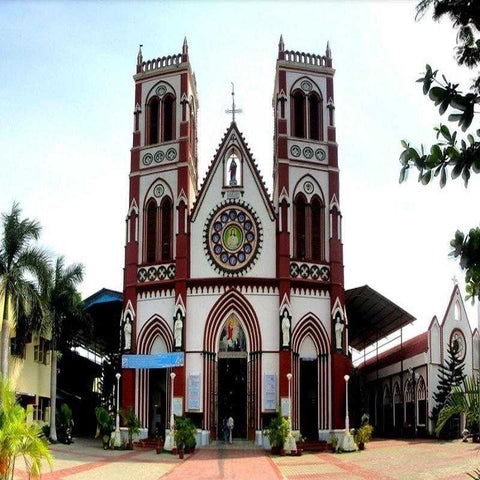
Basilica of the Sacred Heart of Jesus, Pondicherry

 serendipity-holidays-hyderabad-telangana-pondicherry-church-of-sacred-heart-of-jesus-800x800

The Front View
Basilica of the Sacred Heart of Jesus, situated on the south boulevard of Pondicherry in Puducherry, India, is an oriental specimen of Gothic architecture. It contains rare stained glass panels depicting events from the life of Christ and saints of the Catholic Church.[1] In recent years it has become one of the famous pilgrimage spots for Christians.


History
In the year 1895, the then Archbishop Mgr.Gandy consecrated the Archdiocese of Pondicherry to the Sacred Heart of Jesus. He wished to build a new church in devotion of Sacred Heart of Jesus. Rev. Fr. Telesphore Welter, the parish priest of Nellithope prepared the building plan and parish priest of Cathedral Rev. Fr. Fourcaud commenced the construction of the new church in 1902 at the Southern side of Pondicherry.

The blessing of the church and the first mass was held at the western wing of the present church by Mgr. Gandy on 17, December 1907 and the new parish surrounding this church has been established on 27, January 1908.

Centenary celebrations
The year 2008-2009 was celebrated as centenary year of founding of the parish. A special postal stamp and postal envelope were released to mark the valedictory function of the centenary celebrations.[2][3]

Elevation to Basilica status
Papal Decree of Elevation to Minor Basilica

in Latin

in English
These degrees are inscribed near the main entrance of the basilica above the stoups
At the end of the Centenary Celebrations on June 2009, a request was placed through Telesphore Toppo, President of CBCI, to the Holy See for the elevation of this church to a Basilica.

The Holy See granted the status of minor basilica to the church, with a papal brief dated Friday 24 June 2011. This arrived on Friday 29 July 2011 to archbishops house. This was officially announced by Mgr. Antony Anandarayar, Archbishop of Pondicherry and Cuddalore on 29 July 2011. The Papal Nuncio to India, Salvatore Pennacchio (Titular Archbishop of Montemarano) visited the basilica on 2 September 2011 and officially declared the church as a basilica in the name of the holy see.[4] At present the basilica is headed by Rector Rev.Fr. S. Maria Joseph

Structure
This 100 years old historical church is 50 m long, 48 m wide and 18 m high with Latin rite cross shape in aerial view is in Gothic style. 24 main columns hold the structure. The biblical verse from 2 Chronicles 7:16 is written above the entrance door in Latin "sanctificavi locum istum, ut sit nomen meum ibi" which means "I have consecrated this house, that my name may be there forever. My eyes and my heart will be there forever.". Inside the church there are glass pictures of 28 saints who were related to the devotion of Sacred Heart of Jesus.

This 100-year-old church has been led by twenty parish priests. The Grotto for Our Lady of Lourdes, Parish Hall, Adoration chapel and the new parish community hall were some of the development of this church since the 1960s. After the arrival of parish priest Thomas in 2005 the church was fully renovated inside and out.

Statues of the four evangelists were erected, beneath which there are four lamp posts describing their lives and the inviting Jesus and the twelve apostles on the front facade. The Grotto for Sacred Heart of Jesus facing the City Railway Station were added and the church illuminated inside and out with chandeliers, focus and flood lights.

Friday, 13 September 2019

Salim Ali Lake-Aurangabad


Sep, 13
Salim Ali Lake-Aurangabad

 salim-ali-lake-and-bird-sanctuary-Aurangabad-tour-packages-India
Salim Ali Lake (Marathi - पक्षीमित्र सलीम आली सरोवर) is situated close to Delhi Gate, one of the numerous Gates in Aurangabad, inverse Himayat Bagh, Aurangabad. It is situated in the northern piece of the city. During the Mughal time frame, it was known as Khiziri Talab. It has been renamed after the extraordinary ornithologist, naturalist Salim Ali and furthermore known as birdman of India. The workplace of Divisional Commissioner Aurangabad division is situated close to it, so is the gatherer's office of Aurangabad

Mughal time

In Aurangzeb's time, a huge swamp or tank expanded the entire length of the northern divider, (reaching out from present-day Salim Ali Lake till Begumpura/Makbara) yet the exhalation and clamminess demonstrated unfortunate and Aurangzeb requested the segment preceding his castle (Kila-e-Ark) to be filled in and changed over into fields. This recovered segment was later formed into Mughal garden, (presently known as Himayat Bagh) by one of the authorities of Aurangzeb's court, with many natural product bearing trees of various assortments for the imperial court and its authorities. The rest of known as the Khizri talao which is simply past the Delhi door. The other little tank was the Kanval or Loti talao, (close to display day Aam Khas grounds between Kila-e-Ark and Begumpura) was sustained by a spring and was bound in the empty between the royal residence of Aurangzeb and the Mecca entryway, yet the band was deliberately obliterated to spare the city from being overflowed.

Present period

Salim Ali Talab as it is known in the present occasions likewise contains a little winged creature Sanctuary and the region around the lake is useful for Bird watching in Winter when various transient fowls land for settling. There is a nursery kept up by the Aurangabad Municipal Corporation. Sailing offices are additionally accessible when the lake is full during the stormy and winter seasons. As of late it was dug for sediment to expand its water holding limit.

Biodiversity

Salim Ali lake and its encompassing is uncommon and rich biodiversity spot inside the city that hosts just about 16 tree species, 11 bush sorts, 8 climbers, 32 earthbound herbaceous plants, 10 assortments of green growth, 12 of sea-going herbs, 16 oceanic creepy crawlies, molluscs and scavangers, nine assortments of fish, 15 species reptiles, seven kinds of rodents and warm blooded animals and 102 kinds of bugs. Endeavors are taken by condition activists and winged creature darlings in the city to close the memorable Salim Ali Lake for open until further notice and proclaim it as a biodiversity problem area for protection.

Wednesday, 11 September 2019

Singapore 3 NIGHTS 4 DAYS FROM HYDERABAD - 2019


TOUR PLAN
Day 1 Pick up from Changi Airport Singapore on SIC Basis Night at Singapore
Day 2 SIC Full day Universal Studio ticket with two way transfers - Night at Singapore
Day 3 SIC Half day city tour followed by SIC Sentosa tour with cable car and wings of time – II show. - Night at Singapore
Day 4 Drop at Changi Airport Singapore on SIC Basis

HOTELS:
Hotel Boss, Singapore Rs.26,630/- Per person  https://www.hotelboss.sg/


INCLUSIONS:
  • 3 Breakfasts Only
  • SIC Night Safari tour (admission, tram ride & animal / fire show).
  • Pick up drop will be in Changi Airport Singapore on SIC Basis
  • 5% GST

NOTES:
  • The guest can see or skip any sightseeing place/s according to their interest & time.
  • Night driving strictly not allowed.
  • Entry tickets are chargeable for all including tour manager, staff etc., payable at the counters directly by the guest.
  • Eating Meals and Consumption of Alcoholic drinks and smoking are strictly not allowed in the all the Vehicles as per local law.
  • Children below 5 years are Free of Cost. They have to produce Proof of date of birth.
  • The price mentioned above is starting price.
  • Tour plan is for 2 persons travel together.
  • Please read the quotation thoroughly.

  • EXCLUSIONS:
    • All Entrance tickets
    • Lunches & Dinners
    • Meals for extra person / children which are not mentioned in the tour Train Fare/Air fare.
    • Upgrade of transport due to extra number of person or any other reason from cheaper / smaller vehicle to luxury / bigger vehicle.
    • Any up-grade of rooms without extra charge subject to availability.
    • Items of personal in nature, Porterage, tips, laundry, any camera fee, Mineral water, telephone calls, table drinks etc
    • Any additional night shall be charged on pro rata basis.
    • Any other expenses incurred due to bad weather, flight cancellation, road closure, landslides etc.
    • No refund for what has not been seen
    • Any other services not mentioned above
    PLACES TO SEE IN SINGAPORE
    • Marina Bay Sands Singapore
    • Sentosa
    • Gardens by the Bay
    • Merlion
    • Universal Studios Singapore
    • Night Safari
    • Singapore Flyer
    • Singapore Zoo
    • Orchard Road
    • Singapore Botanic Gardens
    • Clarke Quay
    • Jurong Bird Park
    • Resorts World Sentosa
    • River Safari
    • Esplanade - Theatres on the Bay, Singapore
    • ArtScience Museum
    • Singapore Cable Car
    • National Museum of Singapore
    • National Gallery Singapore
    • Pulau Ubin
    • Buddha Tooth Relic Temple
    • Fort Canning Park
    • Mount Faber
    • Helix Bridge
    • Siloso Beach
    • Masjid Sultan

Thursday, 1 August 2019

Numaish

all-india-industrial-exibition-numaish-nampally-hyderabad-Tour-Packages-serendipity-holidays-from-hyderabad-telangana-India-600-600

Website www.numaishonline.com

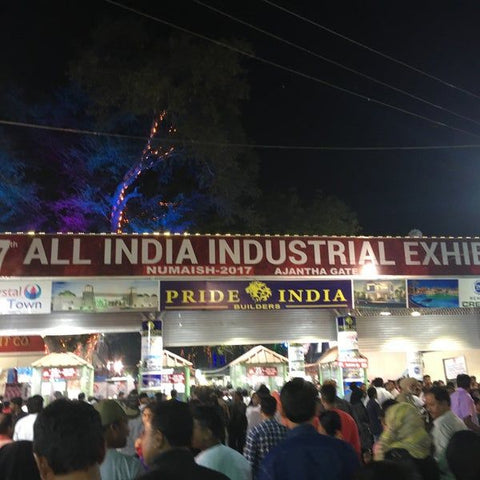
Numaish Masnuāt-e-Mulki or Numaish otherwise called Exhibition is a yearly shopper presentation held in Hyderabad, Telangana, India. The show has remained the main occasion of its sort on the planet to be composed at a stretch for a 46-day time frame at its 23-section of land (93,000 m2) changeless setting in Nampally. It highlights moonlight trips, restaurants and other diversion choices for the guests. 

History 

Numaish Masnuāt-e-Mulki meaning Exhibition of the Local Products, was begun in 1938 by a gathering of alumni of Osmania University to grandstand nearby items. It was the rule of the Last Nizam of Hyderabad, Mir Osman Ali Khan. From a simple 100 slows down in 1938 began at the Public Gardens, the setting has been moved to the Exhibition Grounds, close Nampally Railway Station. The first name was changed to All India Industrial Exhibition, and was renamed to its unique name, the Numaish in 2009. 

Toy train 

The presentation highlights dry products of the soil of Jammu and Kashmir to carefully assembled articles of clothing from Uttar Pradesh, West Bengal and Madhya Pradesh, handiwork things from all over India and electronic merchandise of the best brands in the nation. There are extraordinary slows down sorted out by various women gatherings, convicts and considerably more. The display likewise highlighted floor coverings of Iran and a few slows down from Pakistan till 2011. Be that as it may, because of strategic reasons they won't be accessible from 2012. The Hyderabadi haleem is sold by Hyderabadi eatery Pista House at the show. 

There are three section focuses: Gate No. 1 (Gandhi Bhavan Gate), Gate No. 2 (Ajanta Gate), Gate No.3 (Goshamahal Gate). The Ajanta Gate is the fundamental passageway and the greatest. 

Passage and Car leaving 

For passage to the presentation, INR30 is charged per head. 

From 2012, vehicle leaving is given fixed Rs 50 as expense for four-wheelers and Rs 20 for bikes. Also, there is a great deal of parking spot inside the presentation grounds. Vehicles are permitted passage till 4 pm. Another official parking spot has been recognized on the premises of Government Junior College, Nampally (inverse Gandhi Bhavan)6] Still there are occurrences of hoodwinking individuals in name of vehicle leaving. The rapscallions who have rented out the open grounds close to the show charge Rs 50 for a four-wheeler and Rs 20 for a bike. 

Observation 

25 CCTVs, a three-level security framework has been set up while door jamb metal indicators have been introduced at the three section areas. Aside from these, watch and ward are on obligation till 9 pm regularly during the display. Live video spilling of the Numaish with the assistance of two tilt and zoom cameras is posted on the web. From 2012, Geographical Information System (GIS) has been utilized to distribute the slows down dependent on the accessibility of the space in the grounds. 

Income 

In 2011, around 21 lakh individuals visited the presentation and the general public gathered an income of Rs 13 crore. 

Social Programs 

A few social projects are directed in the Exhibition Club during the 46-day time span that incorporate traditional and famous melodic shows, enchantment appears, mushaira (verse) and so on. As of late Bollywood and Tollywood craftsmen have likewise performed during the Numaish. 

The 75th release of the Numaish initiated on 1/1/2015 saw numerous uncommon projects in Telugu and Urdu including exhibitions by Tollywood craftsmen just as unique Ghazal projects and Comedy programs that have been gone to in enormous numbers by guests. The recently redesigned club lobby was the setting for an extraordinary tribute to Legendary artists of Urdu performed by top ghazal vocalists of Hyderabad. This was an uncommon event where such a large number of surely understood ghazal vocalists got together and performed on a similar stage. A portion of the artists whose ghazals were exhibited are Ghalib, Iqbal, Mir Taqi Mir, Faiz Ahmed Faiz, Ibn-E-Insha and that's only the tip of the iceberg. 

Games will be accessible from 6pm onwards. 

The Legendary Indian Artist, Padma Bhushan Awardee S.P. Balasubramanium was congratulated by the Exhibition Society on 8 February 2015 of every a Grand Program orchestrated by the Society's Club and Reception Sub-Committee. The President of the general public, Eatala Rajender, Telangana Minister for Finance, did the distinctions alongside the other office bearers of the general public. S.P Balasubramanium talked and adulated the administrations being rendered by the Exhibition Society. He additionally played out a couple of his numbers alongside various other Telugu Film Industry vocalists who came and executed as a tribute to Balu Sir (as he's affectionately tended to).

Sunday, 2 June 2019

NEPAL

Jun, 03

NEPAL


Pokhora-District-Nepal.-Steep-hills-Nepal-Tourism-serendipity-holidays-hyderabad-telangana-india-800-800
Nepal is a landlocked nation in Southern Asia, between the Tibet self-governing district of China and India. It contains 8 of the world's 10 most noteworthy pinnacles, including Mount Everest - the world's tallest - on the outskirt with Tibet, and Lumbini, the origin of Gautama Buddha, the author of Buddhism. 

A government for many years, Nepal was pronounced a republic in June 2008. 

Get it 

Geology 

Guests to Nepal for the most part partner the country with snow-topped mountain crests. While there are more than 90 tops which lie above 7000m (22,966 ft), around 33% of the nation is low-lying and subtropical. The country's height ascends from under 100 meters (328 ft) rise in the tropical Terai (the northern edge of the Gangetic Plain) to Sagarmāthā (Mount Everest) - the world's most noteworthy mountain at 8,848m (29,029 ft). 

Height Zones 

Nepal has been partitioned into height zones, south to north: 

External Terai - Level fields, a social and etymological augmentation of northern India. Nepali is spoken not exactly Awadhi and Bhojpuri tongues identified with Hindi and Maithili. Lumbini, Buddha's origination, Kapilvastu - Tilaurakot, the capital of the Shakya Kingdom and Janakpur, Sita's origin, are in this zone. Different urban communities - Dhangadhi, Nepalgunj, Bhairawa, Butwal, Birgunj, Janakpur and Biratnagar - are transportation center points and bordertowns more than movement goals. By and by the Terai may offer open doors for personal presentation to customary Indian culture that have turned out to be less accessible in India itself. 

Siwalik Range or Churia Hills - the peripheral and most reduced scope of lower regions, about 600m (2,000 ft) high. Reaches out the nation over east to west however with huge holes and numerous subranges. Poor soils and no farming to discuss. No created visitor goals, anyway the backwoods are wild and the meager populace of crude seekers and gatherers is extraordinary. 

Inward Terai - enormous valleys between the Siwaliks and higher lower regions toward the north. The Dang and Deukhuri valleys in the Mid West are the biggest, offering chances to encounter Tharu workmanship and culture. Chitwan south of Kathmandu is another of these valleys, known for Chitwan National Park where tigers, rhinos, crocodiles, deer and flying creatures can be watched. Initially these valleys were malarial and gently populated by Tharus who had advanced obstruction and created structural and conduct adjustments constraining introduction to the most perilous nighttime mosquitoes. Concealment of mosquitoes with DDT during the 1960s opened these valleys to pilgrims from the slopes who cleared timberlands and uprooted and abused Tharus. In any case remoter pieces of these valleys still have a Garden of Eden quality - woodlands broken by uncertain fields, sluggish waterways, intriguing native people groups. 

Mahabharat Range - a noticeable lower region go persistent the nation over from east to west aside from thin transecting gulches, with rises climbing up to 3,000m (10,000 ft). Soak southern slants are a dead zone among marsh and Pahari (slope) societies and dialects, which start along the peak and gentler northern inclines. Given clear skies, there are all encompassing perspectives on high himalaya from anyplace on the peak. Immature as a vacationer setting contrasted with India's 'Slope Stations', all things considered Daman and Tansen are alluring goals. 

Center Hills - Valleys north of the Mahabharat Range and slopes up to about 2,000m (6,500 ft). are for the most part possessed by Hindus of the Bahun (consecrated brahmin) and Chhetri (warriors and rulers) standings who communicate in Nepali as their first language. Higher where it turns out to be too cold to even think about growing rice, populaces are generally Magar, Gurung, Tamang, Rai or Limbu, the slope clans from which the British selected Gurkha fighters while the officers' families developed harvests fit to calm atmospheres. Men in these ethnic gatherings likewise fill in as doormen or might be herders moving their groups into the high mountains in summer and the lower valleys in winter. Trekking through the slopes is unremittingly beautiful with streams and terraced fields, pleasant towns, an assortment of ethnic gatherings with unmistakable outfits, and perspectives on the high Himalayas from high focuses. 

Valleys - Kathmandu and toward the west Pokhara involve enormous valleys in the slopes. The Kathmandu Valley was urbanized some time before the principal Europeans achieved the scene and has noteworthy neighborhoods, sanctuary buildings, pagodas, Buddhist stupas, royal residences and bazaars. Its locals are transcendently Newar ranchers, brokers, specialists and government workers. Newar culture is an intriguing blend of Hindu and Buddhist components. Lamentably a scope of slopes north of this valley point of confinement perspectives on the Himalayas. Pokhara has less urban focal points however extraordinary perspectives on the close-by Annapurna Himalaya. Pokhara's Newar populace is kept to bazaars. Somewhere else upper station Hindus rule, whose progenitors most likely were Khas people groups from far western Nepal. Both valleys offer fantastic chances to encounter Nepal without strenuous trekking. Smaller valleys along streams and waterways are significant rice-developing focuses in the slopes. There is a constrained measure of this land and its greater part is claimed by upper standing Hindus. 

Lekhs - Snow every so often falls and keeps going days or weeks in the winter above 3,000m (10,000 ft), however softens away in summer beneath about 5,500m (18,000 ft). Treeline is about 4,000m (13,000 ft). This zone is utilized for summer pasturage however not all year home. 

North of the lekhs, the cold high Himalayas rise suddenly along a shortcoming zone to tops over 6,700m (22,000 ft) and even over 8,000m (26,000 ft). Himalaya signifies 'dwelling place snow', which is uninhabited. Valleys among the pinnacles are possessed, particularly along exchange courses where rice from the marshes was exchanged for salt from the Tibetan Plateau alongside different merchandise. Exchange has reduced since China attached Tibet during the 1950s yet taking into account trekkers and climbers has turned into a monetary motor. Individuals living along these courses have Tibetan affinities however normally talk familiar Nepali. 

Trans-Himalaya - Peaks in this locale north of the most noteworthy Himalayas in focal and western Nepal are lower and gentler, for the most part around 6,000m (20,000 ft). Valleys underneath 5,000m (17,000 ft). are possessed by individuals who are basically Tibetan and have adjusted to living at a lot higher rises than different Nepalis. Streets have not yet infiltrated this far and travel is costly via air or exhausting by walking. All things considered, it is a one of a kind chance to encounter an exceptionally critical and appealing society in awesome environment. 

Stream bowls 

Stream bowls are additionally significant geographic divisions. The Mahabharat Range is a noteworthy hydrologic hindrance in Nepal and different pieces of the Himalaya. South-streaming waterways join in candelabra shapes to get through this range in a couple of restricted canyons. Travel is generally simpler inside these candelabra waste frameworks than between them, so high partitions between waterway frameworks turned out to be truly significant political, semantic and social limits. 

Karnali-Seti-Bheri 

The Karnali framework in the far west is the origin of Pahari ('slope') culture. It was settled by individuals called Khas talking an indo-european language called Khaskura ('Khas talk') that was identified with other north indian dialects, all asserting drop from traditional Sanskrit. 

East of the Karnali legitimate, along a noteworthy tributary called the Bheri and further east in another bowl called the Rapti carried on a Tibeto-Burman individuals called Kham. Khas and Kham individuals appear to have been partners and presumably intermarried to make the union of aryan and mongoloid highlights that particularly describes the second-most elevated Chhetri (Kshatriya) station. It creates the impression that Khas rulers enrolled Kham men as watchmen and warriors. Khas and Kham regions in the far west were subdivided into little kingdoms called the Baisi, actually '22' as they were checked. 

Nepal has one of the world's most elevated birthrates since Hindu young ladies as a rule wed by their initial youngsters, making their whole regenerative potential be used. Besides, men who can manage the cost of it frequently take various spouses. This may follow back to Khas culture, clarifying persevering Khas colonization eastbound as limited measures of land appropriate for rice development were definitely overwhelmed by high birthrates. 

Rapti and Gandaki 

The Rapti stream framework east of the Karnali-Bheri had couple of swamps reasonable for developing rice and broad good countries that were not alluring for Khas settlement but rather were a boundary to movement. Anyway the Rapti's upper tributaries climbed to some degree south of the Himalayas. Between these tributaries and the Dhaulagiri scope of the Himalayas, an enormous east-west valley canceled Dhorpatan stretching the upper Bheri gave a reroute eastbound, over a simple pass called Jaljala into the Gandaki stream framework further east. The Gandaki is said to have seven noteworthy tributaries, most ascending in or past the high Himalaya. They converge to slice through the Mahabharat and Siwalik ranges. In this bowl heights were for the most part lower and precipitation was higher contrasted with the Karnali-Bheri and Rapti bowls. There was extraordinary potential for rice development, the rural base of the Khas lifestyle. A gathering of little realms called the Chaubisi created. Chaubisi actually signifies '24', as these kingdoms were checked. Not all were Khas kindoms. Some were Magar - an enormous indigenous slope clan individuals identified with the Kham. Different kingdoms were Gurung and Tamang. A few Gandaki tributaries ascended in the trans-Himalayan locale where occupants and rulers turned out to be progressively Tibetanized toward the north.

Development of Shah Dynasty from Gorkha 

Inside the Chaubisi kingdoms of the Gandaki bowl, Gorkha was a little valley east of Pokhara led by a Khas family currently called Shah, an honorific title that may have come later, anyway any prior name is by all accounts overlooked. In 1743AD Prithvi Narayan Shah turned into the leader of Gorkha after his dad Nara Bhupal Shah passed on. Prithvi Narayan as of now had a notoriety for being a rash upstart. Making plans to modernize Gorkha's military, he was bringing present day arms from India when traditions officers requested investigation and installment of obligations. Prithvi Narayan won't and assaulted the officers, executing a few preceding getting away with his arms and men. He additionally visited Benares to contemplate the circumstance of neighborhood rulers and the developing infringement of British interests. Prithvi inferred that attack was an unending peril to rulers on the fields of northern India, though the slopes were progressively solid and offered more extension to cut out an enduring domain. 

Kathmandu Valley (Bagmati) 

Thin winding street leads through incredibly various landscape in Nepal. This street drives north from Kathmandu towards Tibet. 

Prithvi Narayan more likely than not been an alluring figure, for he selected, prepared and prepared a considerable armed force and influenced his subjects to guarantee this from his rising until his demise in 1775. Through triumph and settlement, he solidified a few Chaubisi kingdoms. As his space extended, Khaskura wound up known as Gorkhali, for example the language of the Gorkha kingdom. At that point he moved east into the following waterway bowl, the Bagmati which depletes the Kathmandu Valley that held three little however prosperous urban kingdoms. Like the Rapti, the Bagmati rises to some degree south of the Himalaya. In contrast to the Rapti bowl, this valley had once held an enormous lake and the staying alluvial soil was outstandingly ripe. Between the farming bounty, nearby artworks, and broad exchange with Tibet, the urban areas were prosperous. Prithvi Narayan enclosed the valley, cutting off exchange and limiting normal exercises, notwithstanding cultivating and getting water. With a mix of stealth, ruthlessness and terrorizing he won and removed the nearby rulers in 1769, making Kathmandu his new capital. This was the high purpose of Prithvi Narayan's vocation, anyway he kept uniting the Kathmandu Valley with the Chaubisi and Baisi organizations toward the west until his passing in 1775. Gorkhali was re-named Nepali as 'Nepal' came to mean the urbanized Kathmandu Valley, however all terrains managed by the Shahs. 

Koshi 

Prithvi Narayan's beneficiaries Pratap Singh, Rana Bahadur and Girvan Yuddha proceeded with development of their kingdom into the Koshi waterway bowl east of the Bagmati framework. Like the Gandaki, the Koshi customarily has seven noteworthy tributaries sliding from the Himalayas before uniting to get through the Mahabharat and Siwalik ranges. Reaches depleted by Koshi tributaries incorporate Mount Everest and its neighboring tops, just as the western side of the Kangchenjunga massif. Kangchenjunga and a high edge toward the south are the watershed between the Koshi and Tista bowls just as the fringe among Nepal and the previous kingdom of Sikkim that India attached in 1975. 

Regulation by British 

The Shah line's development proceeded with eastbound crosswise over Sikkim and westbound crosswise over Kumaon and past Dehra Dun to the Sutlej River, until the British pronounced war in 1814 lastly vanquished Nepalese powers in 1816. The British needed a cushion state between British India and the Chinese domain that eventually controlled Tibet, so it cut Nepal back roughly to its present size and let it stay autonomous. 

Casual Settlement in Sikkim and Bhutan 

By the by Nepalese eastbound colonization past the Kosi proceeded casually, still determined by high birthrates. By the 1800s eager for land Nepalis were settling in the Tista bowl, which happened to be an alternate nation, Sikkim. During the 1900s they were settling past Sikkim in the kingdom of Bhutan. This kingdom - where late marriage and low populace densities won among the indigenous, socially Tibetan populace - saw the statistic composing on the divider and removed upwards of 100,000 Nepalis in 1990. 

Hindu Groups 

Hindu stations relocated from Southern piece of present day Nepal to Nepal after eleventh century. The conventional Hindu standing framework depends on the four Varna Vyawastha "the class framework" of Brahman (Bahun) clerics, researchers and guides; Kshatriya (Chhetri) rulers and warriors, Vaishya (traders); Shudra (ranchers and modest occupations). Anyway the center Vaishya and Shudra are underrepresented in the slopes, evidently in light of the fact that they didn't have convincing motivation to leave the fields while Muslim trespassers endeavored to dispose of past elites. Dalits appear to have went with the upper ranks into the slopes since they were bound by long standing support courses of action. 

Conventional position guidelines oversee who can eat with whom, particularly when bubbled rice is served, and who can acknowledge water from whom. Until the 1950s these standards were authorized by law. 

Dalits are liable to station based separation thus called 'distance' in social, financial, instructive, political and religious zones. The National Dalit Commission (2002) sorted 28 social gatherings as Dalits. Some contend that the utilization of the term Dalit will never under any circumstance help to cancel station based distance. (Truly, 'Dalit' means 'smothered' in Nepali.) There are recommendations that the term ought not be utilized on the grounds that it breeds mediocrity as well as annoying. 

Newar 

Newars, — the indigenous individuals of the Kathmandu valley—pursue both Hinduism and Buddhism. As per the 2001 statistics, they can be arranged into 40 particular social gatherings, however all talk a typical language called Nepal bhasa (Newa bhaaya). Newars utilize winning lingua francas to convey outside their locale: Nepali in the slopes and Maithili, Bhojpuri and Awadhi in the Terai. 

Indigenous people groups 

The ethnic gatherings of the slopes, Terai and mountain regions are assembled as Janajati. As per the National Foundation for Development of Indigenous Nationalities (NFDIN), ethnic gatherings are those "who have their very own first language and conventional traditions, an unmistakable social character, a particular social structure and composed or oral history the majority of their own". An aggregate of 61 Adibasi Janajatis have been perceived by the Nepal Government, 5 are from the mountain areas, 20 from the Hills, 7 from internal Terai and 11 from the Terai locale. A Janajati is a network who has its own native language and customary culture but does not fall under the ordinary fourfold Varna of the Hindu framework or the Hindu various leveled rank structure. A large number of these ethnic gatherings are Hinduized somewhat, albeit Hindu practices supplement as opposed to supplant increasingly old convictions and practices. In contrast to the Hindus, numerous indigenous nationalities of Nepal, for example, the Sherpa individuals just as the general population of Muslim and Christian beliefs, have a culture of eating hamburger. 

Other station and ethnic gatherings incorporated into the 'other' class are; Sikhs, Christians, Bengalis, and Marawadis. 

Diverse indigenous nationalities are in various phases of improvement. Some indigenous nationalities are travelers, for example Raute, and some are woods occupants, for example Chepang and Bankaria. The vast majority of the indigenous nationalities depend on farming and pastoralism and not many are cosmopolitan, for example Newar. 

Religion 

The Census of 2011 has recorded 10 religions—Hindu, Buddhist, Islam, Kiranti, Christian, Prakriti, Bon, Jain, Bahai and Sikh. As indicated by statistics 2011 principle religions are Hinduism (81.3%/21,551,492), Buddhism (9.0%/2,396,099), Islam (4.4%/1,162,370), Kirat (3.1%/807,169), Christianity (1.4%/375,699), Prakriti (0.5%/121,982), Bon (13,006), Jainism (3,214), Bahai (1,283) and Sikhism (609).
Atmosphere 

Nepal has a Monsoonal atmosphere with four fundamental seasons - however generally a year was classified into six unmistakable atmosphere periods: Basanta (spring), Grishma (late-spring), Barkha (summer rainstorm), Sharad (early harvest time), Hemanta (late fall) and Shishir (winter). 

The following is a general manual for conditions at various seasons: 

Substantial monsoonal downpours from June to September - the downpours are commonly lighter high in the Himalayas than in Kathmandu, however the mountain pinnacles are frequently not unmistakable because of mists. In the Kathmandu Valley and Pokhara - rainstorm rains regularly comprise of an hour or two of downpour each a few days. The downpours clean the air, lanes, and cool the air. On the off chance that you come, bring an umbrella, expect lower hotel costs and less sightseers. 

Clear and cool climate from October to December - after the storm, there is little residue noticeable all around so this is the best season to visit the sloping and uneven locales. 

Cold from January to March, with the temperature in Kathmandu frequently dropping as low as 0°C (32°F) during the evening, with extraordinary cold at high rises. It is conceivable to trek in spots like the Everest area amid the winter, yet it is very cold and snow fall may anticipate going over 4,000 - 4,500 meters (13,000 - 15,000 feet). The Jomosom trek is a sensible option, remaining underneath 3,000 meters (10,000 feet) with expected least temperatures about - 10°C (14°F) (and much better odds of staying away from substantial snow.) 

Dry and warm climate from April to June - there is a bounty of sprouting blooms in the Himalayas as of now, with rhododendrons, specifically, adding a sprinkle of shading to the scene. Terai temperatures may reach or surpass 40°C (104°F) while Kathmandu temperatures are about 30°C (86°F). This is the best time to attempt mountain endeavors. 

The account of temperatures and precipitation of the real areas crosswise over Nepal was begun in 1962 and their midpoints gives a reference point to dissecting the atmosphere pattern. 

GPS maps 

There are couple of maps accessible for Nepal: 

Nepal Trilogy. Which comes as 3 separate maps covering the accompanying zones: Annapurna region with Pokhara, Helambu Langtang territory of ​​Kathmandu and Bhaktapur, Everest locale with Jiri and Tumlingtar. 

Garmin NepalTOPO NPL Routable 2011.20 

Urban communities 

Kathmandu — capital and social focal point of Nepal, with the stupas at Boudhanath and Swayambhu 

Bhaktapur — well-saved chronicled city, focal point of Nepali stoneware making, no mechanized vehicles permitted! 

Biratnagar — this city is in eastern Nepal close Dharan and acclaimed for political reasons 

Birgunj — business entryway among India and Nepal in mid-southern Nepal 

Boudhanath — (Boudha) home of the biggest Buddhist Stupa in Nepal and a significant spot of journey and reflection for Buddhists, neighborhood Nepalis, and travelers 

Janakpur — a chronicled religious focus and home to the 500-year old Janaki Temple 

Namche Bazaar — a Sherpa settlement situated in the Solu Khumbu locale - well known with trekkers 

Nepalgunj — the fundamental center point for the Mid-and Far-Western Development Region; Bardiya National Park is close-by 

Patan — Beautiful, memorable Patan Durbar Square was assigned as a World Heritage Site by UNESCO in 1979 

Different goals 

Bolted between the snow pinnacles of the Himalayas and the fuming Ganges plain, Nepal has for quite some time been home to meandering religious zealots and tantric yogis. Thus, the nation has an abundance of hallowed locales and characteristic miracles: 

Annapurna — well known trekking area of Nepal with the world-acclaimed Annapurna Circuit 

Chitwan National Park — see tigers, rhinos and creatures in the wilderness 

Daman — little town in the mountains offering all encompassing perspectives on the Himalayas; particularly shocking at dawn and dusk 

Haleshi (Tibetan: Maratika) — the site of a mountain cavern where Padmasambhava accomplished a state past life and passing 

Lumbini — the consecrated site of the Buddha Shakyamuni's introduction to the world 

Mount Everest — the tallest pinnacle of the world in the Khumbu locale 

Nagarkot — a slope station one hour from Kathmandu offering magnificent perspectives on the Himalayan Range 

Parping — the site of a few holy surrenders related with Padmasambhava, the originator of Tibetan Buddhism 

Tangting—a wonderful and unfamiliar conventional Gurung town with a staggering perspective on the Annapurna run 

Suklaphanta National Park—biggest meadow in the Far Western Terai, however this isn't the main superlative: it is home to Nepal's, possibly Asia's, biggest populace of marsh deer 

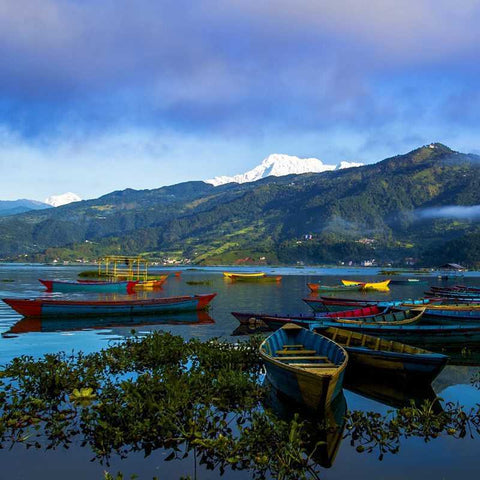
Pokhara — pleasant lake-side town quick turning into the goal of decision for explorers because of the landscape, experience sports, feasting, lodgings and unrecorded music scene 

Gorkha — community close Pokhara the occupants of which were known as Gorkhali and the beginning of current Nepal 

Bhimdattanagar — community close Indian fringe, Banbasa. Its closest fringe to Indian capital Delhi. Home of biggest deer group in Asia. 

Jorayal — little horticultural town close Mahabharat Range, Doti. Its closest fringe to East is Bogtan Rural Municipality,Doti, on South is Chure Rural Municipality, Kailali, on West is Alital Rural Mun, Dadeldhura and on North is Ganyapdhura Rural Municipality, Dadeldhura and Shikhar Municipality, Doti. 

Khandeshwori — little town on lower regions of Api Himal in Darchula. 

See additionally: Sacred locales of the Indian sub-mainland. 

Get in 

Visas 

Natives of India needn't bother with a visa to enter Nepal - they may enter utilizing an identification, photograph drivers permit or administrative/apportion/voter ID card and may remain and work uncertainly. 

Visitor visas are accessible on entry for natives of every other nation (aside from Afghanistan, Cameroon, Ethiopia, Ghana, Iraq, Liberia, Nigeria, Palestine, Somalia, Swaziland, Syria and Zimbabwe) at the assigned land fringes (see underneath) for USD25, for 15 days, USD40 for 30 days and USD100 for 90 days. They must be conceded for a limit of 150 days in every year time span. 

Just as US dollars, other convertible monetary standards like the euro, Pound sterling and Australian dollars can likewise be utilized however some littler section focuses (like Birgunj) may not acknowledge them. 

All traveler visas are presently "different section" type visa and grant numerous passages and ways out amid the time of legitimacy. 

Know that, without consent, deliberate administrations while on a vacationer visa is carefully denied. It is a culpable offense. 

There is nitty gritty data on the official site of Nepal Immigration. 

As of November 2016, there are various computerized machines as you enter the Kathmandu air terminal where you can either filter your international ID or enter your subtleties physically and have your photograph taken. When complete, the machines will give you a receipt which you would then be able to take to the installment stand before at last exhibiting everything to the migration officers at the corners in return for your visa. 

Step by step instructions to expand your visa (as of May 2016): To broaden your vacationer visa, visit the Nepal Immigration Department in Kathmandu with your international ID and another (photograph not required for traveler visa augmentation), and pay US $2 for consistently past your visa you need to remain, up to the limit of 150 days out of every year. They require to submit electronic application structure ahead of time, yet it tends to be done in exceptional booth in the workplace. Least visa augmentation period is 15 days for visitor visas (in this way it costs 30 USD or proportionate in rupees). Be that as it may, in the event that you effectively missed your visa termination date, 20 USD of extra charge may apply. For visitor visa photograph isn't required, simply go to electronic application booth inside the Immigration Department, where decent Nepali will fill the structure for you and take a visa photograph for nothing. At that point continue to the visa application counter, pay the cash and hang tight for like one hour and they will call your name. You can ask head out organization in Thamel to do it for you, yet they will charge like 25 USD for this administration (or less in case you're a decent arbitrator). 

A few bloggers referenced, that on the off chance that you outstay and simply attempt to cross outskirt in the airplane terminal, they'll charge you some additional cash, yet the closest ATM is outside the security check, so it's not entirely obvious your plane. Then again, they acknowledge dollars. 

Purposes of section or exit: 

The purposes of passage and exit for sightseers: 

Tribhuvan International Airport, Kathmandu 

Kakarvitta, Jhapa (Eastern Nepal) 

Birgunj, Parsa (Central Nepal) 

Kodari, Sindhupalchowk (Northern Border) 

Belahia, Bhairahawa (Rupandehi, Western Nepal) 

Jamunaha, Nepalgunj (Banke, Mid Western Nepal) 

Mohana, Dhangadhi (Kailali, Far Western Nepal) 

Gadda Chauki, Bhimdattanagar (Kanchanpur, Far Western Nepal) 

Visas are free for all vacationers who originate from a SAARC nation. 

Know that if originating from India, INR500 and INR1000 monetary certificates may not be imported since their course is restricted in Nepal. Notwithstanding, in section focuses that are deferring India (Karkavitta for instance) will have a lot of money trade focuses that trade Indian rupees (IC) to Nepali rupees (NC). Ask from a couple of spots for the rates. Best rates you would get will be 0-3% off from the mid-showcase rates. Anything over that, leave and attempt the following one. 

Via plane 

Nepal's Tribhuvan International Airport is the fundamental section point for those landing via air, and is found only outside of the Ring Road in Kathmandu. The airplane terminal fills in as the center for Nepal Airlines, which flies from different goals in India, just as Bangkok, Doha, Dubai, Hong Kong and Kuala Lumpur. 

Other significant carriers that serve Nepal from crosswise over Asia incorporate Air Arabia, Air Asia X, Air China, Air India, Etihad, flydubai, Korean Air, Malaysia Airlines, Oman Air, Qatar Airways, Silk Air and Thai Airways. 

Starting at 2016, the main carrier that flies straightforwardly to Kathmandu from Europe is Turkish Airlines from Istanbul. 
Monday, 20 May 2019

Dehradun

May, 21
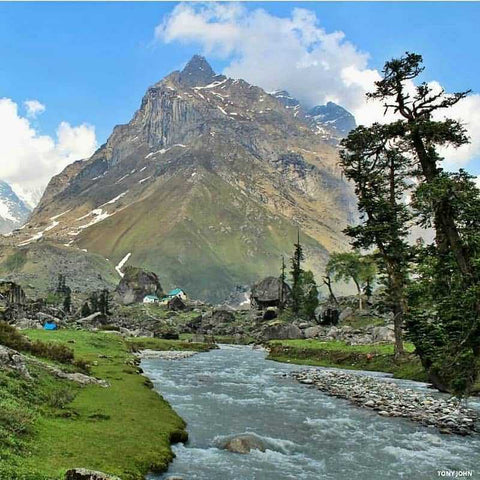
Dehradun  is the temporary capital of Uttarakhand state. It is settled between the Himalayan lower regions toward the north and the Shivaliks toward the South. The town offers stunning view.
 Dehradun-sightseeing-Har-Ki-Doon-serendipity-holidays-hyderabad-telangana-tours-packages-800-800
Get it

Dehradun is arranged at a height of 1,400 ft in the Doon Valley between two of the most significant waterways in India: the Ganga and Yamuna. The town likewise fills in as an advantageous base for visiting the region's numerous visitor locales.

Dehradun has encountered huge development as of late, and right now has a populace of around 1,250,000. It is additionally well known for the Doon School, which is regularly alluded to as the Eton of India. While escaped the spotlight, RIMC (Rashtriya Indian Military College), Dehradun has created probably the best fighters on the two sides of the outskirts.

Via plane

Sprightly Grant Airport (IATA: DED) (ICAO: VIDN) - Air India(airindia.com), Spicejet (spicejet.com) and Indigo (goindigo.in) work day by day flights among Dehradun and Delhi. Further, corresponding flights are accessible to some real urban areas including Mumbai.


To achieve the air terminal from the city is badly arranged as it is 30 km from town and there is no immediate transport administration to achieve it. One can benefit private taxi administration accessible at the airplane terminal (US$30), or inns may give their very own game plans. At the point when at landing at Dehradun airplane terminal, a taxi can be reserved through the prepaid taxi counter accessible at Dehradun air terminal.

Via train

Dehradun (IR station code : DDN) is a noteworthy station and an end in Uttarakhand. It is associated by rail to Delhi, Mumbai, Varanasi, Allahabad, Kolkata, Gorakhpur, Amritsar, Indore, Ujjain and Chennai. Here are some valuable trains to reach Dehradun:

See

The Kalinga War Memorial, Sahastradhara Road. The main war commemoration of its sort on the planet which was raised by the British to respect their enemy, the Gurkhas (or the Gorkhas).

The Gurkha Fort, Tapovan Forest Area.

The FRI Museum, Forest Research Institute. Extravagant environs and one of the biggest establishments of its sort. Guided visits are accessible. Open: 9AM-1PM and 2:30PM-5:30PM. Affirmation is free. Photos are permitted, yet no glimmer inside. A huge gathering of backwoods items and numerous gallaries about the timberland. There are 6 exhibitions:

Pathology exhibition

Social ranger service exhibition

Siviculture exhibition

Timber exhibition

Non wood woodland item exhibition

Entemology exhibition

Mindrolling Monastery, ☎ '+91 135'' 264-0556, 264-0968, A substantial Buddhist religious community in the Tibetan Nyingma custom. alter

Chetwoode Hall, The Indian Military Academy. A beguiling little historical center lodging accumulations of twentieth century military ancient rarities.

Clock Tower, Rajpur Road (Rajpur and Gandhi Roads crossing). Worked by the British, this remaining parts the symbol of the downtown zone. alter

Smash Rai Darbar, Jhanda Mohalla. Worked by Guru Har Rai's child, it draws in numerous Sikh travelers from the adjacent province of Punjab. Confirmation is free and non-Sikhs are welcome.

Tapkeshwar Temple, Garhi Cantt. An antiquated sanctuary devoted to Lord Shiva, Tapkeshwar is arranged on the banks of a waterway. alter

Sai Darbar Temple, Rajpur Road. This spot of love holds a high otherworldly esteem, and is along these lines visited by travelers the nation over.

The Char Siddhs, containing a gathering of four sanctuaries around Dehradun : Lakshman Siddh (along the Dehradun-Rishikesh street 12 km from Dehradun), Kalu Siddh (close Baniyawala), Manak Siddh (close Shimla Bypass Road) and Madu Siddh (close Premnagar). Little sanctuaries in picturesque and up 'til now pristine areas. It is regularly trusted that meeting every one of the four Siddhs in a solitary day will satisfy a fan's desires.

Tapovan, Rajpur Road. As per legend, Guru Dronacharya had done atonement here.

Jaspal Rana Shooting Ranges, Majhon-Paunda, Via Nanda Ki Chowki, Premnagar, Dehradun

Tiger View Jungle Camp, Village Goolar Khalla, Post Saura, Via Raipur, Dehradun  

RIMC, Rashtriya Indian Military College one of the best school in India for making the children to man of his word cadets

Door at RIMC

Wadia Institute of Himalayan Geology Another spot worth a visit is the Wadia Institute of Himalayan Geology. It is the best focus on Himalayan geography in the nation and has done some spearheading work in the field. An exhibition hall showing the land decent variety of the sub-mainland is the focal point of fascination here and an absolute necessity see for each one of those meeting the organization.

Burglar's Cave Also known as Guchchu Pani, arranged at a separation of eight km from the downtown area. Burglar's cavern is a lovely outing spot. In plain view here is one of nature's weirdest marvels; a surge of water goes underground here and returns a couple of meters away. The cavern is encompassed by slopes and is a delightful escape for those searching for harmony and calm of the slopes.

Sahastradhara Around 14 km from Dehradun is the virus Sulfur water spring called Sahastradhara. The spring is accepted to have outstanding restorative esteem and the trickling caverns and a shower in the Baldi River close to the spring are said to revive the body and soul.

Local Science Center Made with coordinated effort of UCOST and NCSM. It is the principal science focal point of district .It will be it siuuated in grounds of UCOST. This inside has wildernesses innovation, fun science exhibition, 3d appears, and a planetarium ,. The primary fascination is its himalayan Gallery. Outside the structure there is a Dino Park and Science Park. Hours: 10 am to 5 pm, yet the meeting time is 11 to 4:30pm.

Subhir Raha Oil Museum-it is additionally an interesting museum.also known as ONGC exhibition hall. It has 3 stories ground floor indicates scan for oil and history for oil and the fundamental attractions are 2d and 3d shows, pendulum and collapsing rock. First floor have voyage of unrefined petroleum and procedure. This exhibition hall is made up by ONGC and NCSM. There is a trinket shop where you can purchase shirts, mugs,key rings and a lot more it has additionally a flask. Note: most automobiles and local people don't have the foggiest idea about the area of the exhibition hall so bring ahead of time for headings. Telephone number: 0135-2794109,2794487. Hours: Closed Monday and Thursdays, April to September - 1100 to 1900 and October to March - 1000 to 1800.

Dehradun Zoo Earlier Malsi deer park, presently is a vast slope zoo. It has excellent scene with all the more then 50 types of creature .it has als ostrich emu macu turkey and a lot progressively outside winged animal and all the more then 5 kinds of deer, crocodile, panther, sambhar and some more. It has an expansive play zone with 50 rides and have very much looked after greenhouse, park, flask, aviary and has courageous zone moreover. It is an absolute necessity visit.

Do

Outing - Pack a hamper of nourishment and beverages and outing at Sahastradhara, on the banks of the Baldi River. The mineral waters here are unadulterated and clean. It is a 30 minute drive from the city of Dehradun. You can likewise lease a cycle from Hotel Madhuban. It takes barely an hour to bicycle down.

In the wake of a monotonous day's touring, drive down to the town of Dakpathar 45 km away. The shimmering waters of the Yamuna makes this the ideal spot to unwind. The perfect little GMVN Tourist Complex is situated inside the town. It has a decent eatery and a little pool.

Sunday, 19 May 2019

Rishikesh

Rishikesh is a community in the northern territory of Uttarakhand in India. Beautifully found where the Ganges River descends from the Himalayas, Rishikesh shot to Western notoriety when the Beatles dropped by for a visit to Maharishi Mahesh Yogi's ashram (presently shut), and the town is as yet known as the World Capital of Yoga. 

Rishikesh is additionally the Gateway to the Himalayas. The Char Dham Yatra (Four Shrines Sacred Journey) in a perfect world starts from Rishikesh. 
serendipity-holidays-hyderabad-telangana-tours-rishikesh-packages-800-800
Get it 

The focal point of town where the train and transport stations can be found is of little enthusiasm to generally voyagers. Further north-east are 2 spans crossing the Ganges, Ram Jhula [86] and Lakshman Jhula [87], at either end of these scaffolds are the primary center points of action and intrigue. 

Most settlement and eateries can be found close Lakshman Jhula, High Bank and Swarg Ashram. 

Get in 

Via plane 

Rishikesh is in closeness of Dehradun's Jolly Grant Airport [15 kms] an as of late redesigned airplane terminal. There are various non-stop flights from Delhi which is the closest metro airplane terminal. Flight natives have expanded significantly and costs have dropped strongly making it both moderate and quicker to travel to the region. 

Flights from New Delhi (DEL) to Dehradun (DED) 

6:20 am → 7:15 am DEL-DED S M T W T F S Air India AI9645 

11:20 am → 12:05 am DEL-DED S M T W T F S Indigo 6E964 

11:45 am → 12:30 am DEL-DED S M T W T F S SpiceJet SG124 

1:00 pm → 1:55 pm DEL-DED S M T W T F S Indigo 6E6408 

1:15 pm → 2:15 pm DEL-DED S M T W T F S Spicejet SG2936 

4:25 pm → 5:20 pm DEL-DED S M T W T F S Indigo 6E246 

5:35 pm → 6:20 pm DEL-DED S M T W T F S SpiceJet SG2327 

5:45 pm → 6:45 pm DEL-DED S M T W T F S Air India AI9609 

Flights from Lucknow (LKO) to Dehradun (DED) 

8:00 am → 9:30 am LKO-DED S M T W T F S Air India 9691 

Flights from Jammu (IXJ) to Dehradun (DED) 

10:05 am → 11:25 am IXJ-DED S M T W T F S SpiceJet SG2935 

Via vehicle 

Delhi air terminal to Rishikesh via vehicle is a decent native for a problem free voyaging uncommonly for remote visitors who are heading out to India out of the blue. It's a 6 to 7 hours adventure. Costs fluctuate from US$ 85 for a cooled minimized vehicle to US$ 125 for a cooled SUV (yet rates are a lot higher in the event that one profits these administrations from prepaid taxi stalls situated at the air terminal). 

Via train 

A tranquil branch line interfaces Rishikesh to Haridwar, yet there are just around three moderate trains every day. It is smarter to take the train to Haridwar and proceed by transport (45 min, Rs.30-70 relying upon the transport), by taxi (30 min, Rs.800) or by shared auto-rickshaw (40 min, Rs.35). Notwithstanding, going via train is suggested in pinnacle seasons or amid a 'mela' (reasonable) when transport courses are occupied in Haridwar while prepares regularly run vacant and the charges are low (only Rs.4 for a traveler train administration). You can take share rickshaws (vehicle brand name Vikram) towards Lakshman Jhula (Rs.10) from Rishikesh station. You should cross Ram Jhula to reach Swarg Ashram on the opposite side of waterway Ganga. There are numerous trains from Delhi to Haridwar. A portion of the better are: Shatabadi Express, Jan Shatabdi, AC Special Express, Mussoorie Express. Travel specialists in Swarg Ashram and Lakshman Jhula can book train tickets for forward voyages; a lot simpler than going to Rishikesh railroad station to purchase a ticket. Some may offer you a ticket from Raiwala, a little stop among Rishikesh and Haridwar, yet this station, while closer, is modest and prepares stop for a couple of moments - better to load up the train at Haridwar. 

Trains from Rishikesh 

Rishikesh - Delhi 07:00 

Rishikesh - Haridwar 08:10 

Rishikesh - Bandikui 14:10 

Rishikesh - Haridwar 14:20 Rs 4/ - 

Rishikesh - Haridwar 18:35 Rs 4/ - 

Express: 

Rishikesh - Jammutawi 16:20 

Hemkunt Express(14610) 13:25 2A-1055, 3A-735, SL-270 

Traveler Trains from Haridwar to Rishikesh, Approx travel time 1hr. 

Haridwar - Rishikesh 05:20 

Haridwar - Rishikesh 10:30 

Haridwar - Rishikesh 17:25 

By transport 

From Delhi the city is around 230 km away and is very much associated with transports. A transport voyage may take around 5-7 hours - relying upon the traffic - and costs you about Rs 130-350. An AC Bus will cost about Rs 250-700. In Rishikesh, there are a few travel organizations dissipated around Swarg Ashram and Lakshman Jhula that can book extravagance transports to normal goals like Delhi (Rs 250-700), Jaipur, Pushkar and Varanasi. The opportune time to visit would be February, March, August-October. In July there is a celebration called Saavan where a large number of individuals run to Rishikesh. Significant streets are blocked and inns are packed. It is smarter to abstain from heading out to Rishikesh amid that time. 

Get around 

Auto-rickshaws are valuable from the transport/train stations to get to both of the scaffolds (jhula) and for the southern side of the Ganges. Shared cars (Vikram) employ the Haridwar-Rishikesh principle street till Tapovan, and effectively banner down from the Rishikesh town to both of the scaffolds (Rs.5-10). Swargashram is basically person on foot just, however it's conservative and walkable (similar to the entire of the town). For other autorickshaw ventures you ought to hope to pay around Rs 15/km. 

Rundown of private cabs 

In case you're going up into the slopes or need a taxi somewhat later at night. 

Krishna Holidays: Sightseeing Tour Operator, ☎ +919557670187 (thekrishnaholidays1@gmail.com), [1]. .  

Taxi In Rishikesh, ☎ +91 9997969925, Email-thekrishnaholidays1@gmail.com, site: www.raftingcampingrishikesh.com. 

Taxi in Haridwar, ☎ +91 9557670187. 

Reasonable Taxi Service in Rishikesh, ☎ +91 8218445792. 

Rishikesh Taxi Services, ☎ +91 9997969925. 

Krishna Holidays: Delhi-Rishikesh Cab Services, (thekrishnaholidays1@gmail.com), [2]. 24 hours. .  

Uttarakhand Explore: Taxi in Rishkesh, ☎ 8650909292 (info@taxiservicerishikesh.com), [3]. 24 hours. .  

Shubh Yatra Travels: Taxi Service, ☎ +919837171605 (shubhyatra@gmail.com), [4]. 24 hours. .  

Rishikesh Taxi Service, ☎ +919758922888 (info@rishikeshtaxiservice.com), [5]. 24 hours. .  

See 

Trayambakeshwar Temple, Lakshman Jhula 

Triveni Ghat, [6]. This is a washing ghat. Every day in the first part of the day and night there are thousands who scrub down here and appreciate the Maha Aarti being performed. It is extremely calming to sit on the banks of the stream and appreciate the cool wind from the waterway.  

Bharat Mandir [88] 

Lakshman Jhula [89] 

Gita Bhavan. Spot of Guru Shri Ram Sukh Daasji, (the extraordinary mastermind of his time) Popular among the Hindu Brahmin Community. Two times per year individuals assemble at this ashram to peruse the Ramayana together.  

Swarg Ashram, Shri 108 Baba kali Kamli Wale Swami Atam Prakash Ji. Swargashram ( Heavenly Abode) as the name indicates is a lovely spot arranged in beautiful surroundings at the foot of Himalayas on the left bank of the Ganges among Rishikesh and Laxmanjhula. It is the profound "ground zero" of Rishikesh, loaded up with a convergence of ashrams and sanctuaries. The regions is known for its sound and satwik living condition. It is this spot where from times of yesteryear the acclaimed Yogis and Rishis have been doing the Tapasya. Various notice of this spot happens in the sacred text Puranas  

Parmarth Niketan. One of only a handful couple of Ashrams left in India where Kids get the Vedas Education. Must Visit in Evening for the Pooja/Aarti. 5PM in Winter and 6PM in summer.  

Neelkanth Mahadev Mela 

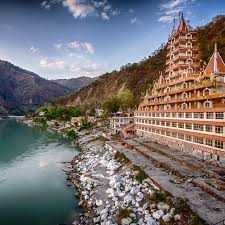
Trayambakeshwar Temple, Lakshman Jhula. is 13 stories high, with various divinities all through.  

Music Concert (Veena Maharaja Music School), 20 meter left from Ram Jhula Bridge close police check post, Swargashram, Rishieksh India., ☎ 9412029817, [7]. In the Veena Maharaja Music school, the Music Concert is sorted out each Sunday of the week at 7 PM around evening time. In which the expert Indian Classical performers are welcome to excitement the groups of onlookers with the charming sound of their beautiful and attractive instruments.  

Maharishi Mahesh Yogi's ashram (Beatles ashram) Where the fab four rehearsed transendental contemplation and composed numerous melodies from the White collection. Meander around for a couple of hours to see stunning intercession arches and rooms, structures and fine art. Passage 600r in the Tiger save.
Do 

Ganges close Rishikesh 

Take a heavenly dunk in the Ganges, with rumored mending powers. 

Register with an Ashram to think about yoga, contemplation and Hindu rationality. 

Wilderness Rafting Rishikesh is exceptionally prevalent for its boating on the River Ganga (Ganges). The months from September to December and March to June are considered as the best time frames for a definitive happiness regarding water boating. The boating will continue for a few kilometers, and the way is blended with rapids, extending from Level 1 to Level 5, arranged by trouble. Toward the finish of the trek, you have the native of hopping approximately 20 feet from an edge into the water. There are a few nearby travel organizations, offering these boating trips. The bundle more often than excludes a medium-term camp on the banks of the waterway, with a splendid and hazardous trek among the slopes toward the beginning of the day. On the off chance that one has time, courses in boating are additionally advertised. [90] 

Outdoors is a recreational action that does not have any age limit. Any person who likes to investigate new places and appreciate the magnificence and tranquility of nature can leave on an outdoors voyage. Outdoors in Rishikesh on the Ganga shoreline offer a situation to wake up with the fowls cher bite and can swim in the crisp water of the stream Ganges. Outdoors in Rishikesh is an exceptionally famous activity.[91] 

Rappelling Climbing down with a rope is called rappelling. The gathering is taken to a spot where there is a bluff drop, specialists with appropriate hardware who setup the rigging first and after that, one by one, everybody descends. It's tied in with believing your apparatus and adhering to the guidelines and after that it's a great deal of fun. 

Shake climbing This is something everybody knows about, this is likewise incorporated into a portion of the camps yet not every person can do it as it requires a ton of solidarity and ability. The gathering is taken to a precipice side and with appropriate security gear everybody is allowed to climb the bluff side. 

Precipice Jumping You should bounce into solidifying water from a bluff! Indeed, it sounds insane however this is one thing which everybody can gloat about back home, obviously you are wearing a real existence coat and a head protector yet at the same time to hop from so high into the Ganga which is dinky and the base can't be seen, dislike hopping into a pool where one can see the base the water is static. 

Kayaking is the utilization of a kayak for moving crosswise over water. Kayaking is separated from paddling by the way that a kayak has a shut cockpit and a kayak has an open cockpit. They additionally utilize a two bladed oar. Another significant distinction is standing out the paddler sits in the vessel. Kayakers sit in a seat on the base of the pontoon with their legs reached out before them. Canoeists will either sit on a raised seat or bow legitimately on the base of the vessel. Whitewater kayaking is the game of paddling a kayak on a moving waterway, normally a whitewater stream. Whitewater kayaking can run from straightforward, cheerful delicately moving water, to requesting, hazardous whitewater. 

Trekking There are part of delicate treks accessible around Rishikesh. Some of them take you to wonderful and concealed cascades. These excellent normal miracles are 2-6 kms from Laxman Jhula and are covered up in the close-by forest[92]. One additionally has the choice to trek to Neelkanth Mandir(11 Kms). It is prudent to go in a gathering than meandering in the wild alone and taking a chance with your life. 

Close By Excursions There are numerous little trip/touring visits for half day or one day. Like to Vashishtha cavern, Kunjapuri sanctuary (1700Mts), Neer Gaddu Water fall, Mussorie, Haridwar. Aides and taxi can be reserved by many travel offices one of them Krishna Holidays is ideal and believed travel organization in Rishikesh phone="9557670187, 9997969925" email thekrishnaholidays1@gmail.com. 

Crystal gazing administrations Astrology administrations Like individual horoscope and palm perusing from the famous celestial prophet b.p.uniyal are very prominent among the remote sightseers. you should give your own points of interest like date and time of birth,city of birth and so on for the estimations and you can ask your own inquiries and recommendations according to your diagram. one can likewise learn soothsaying here. you can by and by book an arrangement for a palm perusing or horoscope session at "ganga soothsaying focus" close german bread shop, laxman jhula. email bpuniyal47@rediffmail.com and telephone no is 9897483488. you can likewise request your horoscope to be sent to your email id. 

Soothsaying Classes If you are happy to learn crystal gazing or palmistry at that point contact Dr. Gaurav Agrawal at Indian Palmistry Institute. The inside was set up in 2003 and from that point forward the meeting administration and classes are led. Address is - Indian Palmistry Institute, Near Pyramid Cafe, Laxman Jhula, Rishieksh. 249302. url="http://www.indianpalmistryinstitute.com/ 

Bungee Jump, (15km in front of Rishikesh on Rishikesh-Neelkanth street), ☎ 7830335577, [8]. You can attempt bungee seize Jumpin Heights. It is a one of a kind involvement in India, a bounce from 83 mtrs simply over a characteristic stream and have a great time. Bungee for Rs. 3000(inc. Rs 300 transport from Laxman Jhula and back) and Fox Flying for Rs. 2000(inc. Rs 300 transport from Laxman Jhula and back)  

Mukeshji's Jungle Vibes, Shisham Jhari,Rishikesh (Near Dayanand Ashram), ☎ 09411312049. . Have a rare encounter of making the Australian Didgeridoos, African Djmbes and other melodic instruments in the direction of famous Mukeshji while he captivates you with his clever stories and takes you alongside him in his Himalayan Journeys. An individual visiting here gets himself/herself in a chose horde of music enthusiasts and extraordinary globe-trotters from around the globe.  

Camp Gold Coast rishikesh, Beach no-17 B, Sing Talli-7 Rishikesh - Deoprayag Highway 800 mtrs from Byasi m Rishikesh, Uttarakhand 249201, India, ☎ +91 9953636000, [9]. Camp Gold is one of the greatest boating shoreline camps arranged on the banks of waterway Ganga, is around 26 kms. from Rishikesh and 260 Kms from Delhi. Boating, Kayaking, Body surfing, trekking, outdoors are the ajor exercises led in this camp.  

Soma Reiki focus, (Near the Swargashram Taxi stand), ☎ 0091 98 97 73 26 79 (somareikicentre@gmail.com,). keep running by soma a nearby reiki ace which is in Gita Ashram